Insights – December 2024
 by
by 
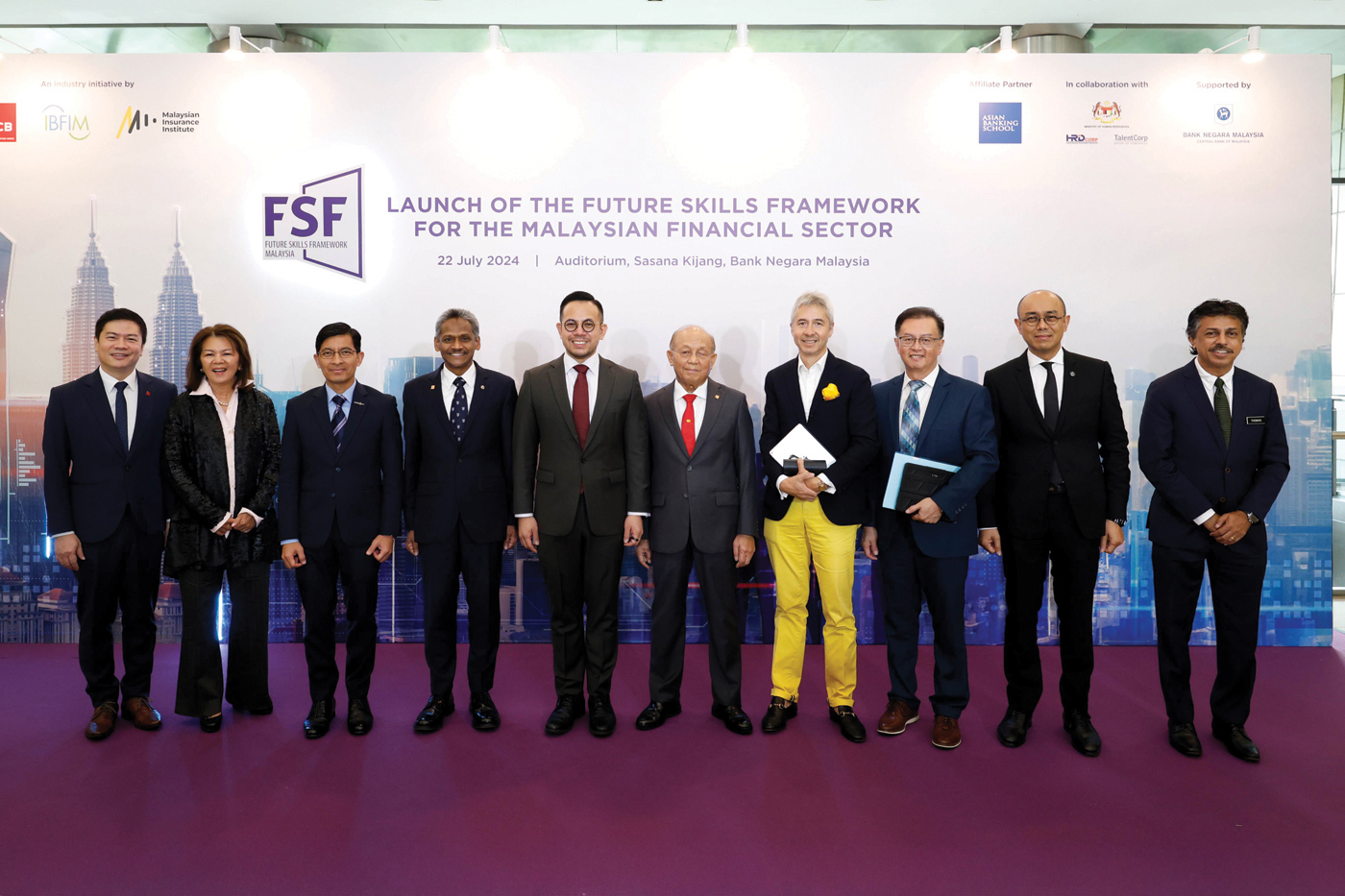
Malaysia’s first Future Skills Framework (FSF) was launched on 22 July 2024 at Sasana Kijang, constituting an important step in pursuit of the Financial Sector Blueprint 2022-2026, which calls for a whole-of-industry and national approach to address the pressing challenges in the financial sector.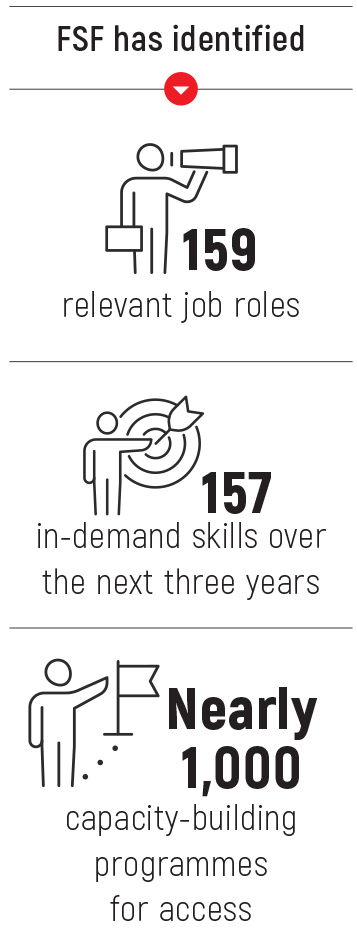
A comprehensive and customisable talent planning tool, this finance-sector-led initiative aligns industry’s future needs with capacity-building programmes for the acquisition of vital skills.
Spearheaded by the Asian Institute of Chartered Bankers (the Institute) in collaboration with the Islamic Banking and Finance Institute Malaysia and the Asian Institute of Insurance, the event was officiated by Datuk Abdul Rasheed Ghaffour, FCB, Governor of Bank Negara Malaysia; and Yang Berhormat Steven Sim Chee Keong, Minister of Human Resources, Malaysia.
The Governor, in his keynote address, said: “[T]raditional strategies for recruitment and sourcing – such as through conventional graduate pathways – might no longer be the best way to attract talent with the right skills. We have seen organisations increasingly embracing a ‘skills first’ approach in attracting, hiring and developing talent. This prioritises individual skills and competencies, irrespective of how they are acquired. And with technology, organisations can equip their employees with tailored skills based on business needs as and when they are needed and in a more cost-effective way. Further, by adopting a ‘skills first’ strategy, employers can open opportunities for more people with the right skills mix to join the industry to drive organisational success.”
Edward Ling, the Institute’s Chief Executive said, “As Malaysia aims for a 35% skilled workforce by 2030, the FSF marks a pivotal step in advancing a future-ready financial sector workforce.
“AICB is proud to lead this initiative, reflecting our commitment to addressing the industry’s evolving needs, setting high standards for skills mastery, and fostering continuous learning for the sector’s growth and professional excellence.”
 The 2024 Kyndryl Readiness Report reveals that while 76% of businesses are investing in traditional artificial intelligence (AI) and machine learning, only 42% see a positive return on investment. Additionally, 86% of leaders believe their AI implementation is best-in-class, yet 71% feel their IT infrastructure is not fully prepared for AI deployment.
According to Effendi Azmi Hashim, Managing Director of Kyndryl Malaysia and Indonesia, banks looking to embark on their generative AI (gen AI) journey should consider the following critical factors:
+ Trusted Data Source: Input will always determine output – and before banks can trust insights provided by a new technology like gen AI, they must trust the data that is informing them. The reliability and scalability of gen AI hinge on a strong data foundation. Banks must prioritise data privacy, quality, and a comprehensive data strategy.
+ Use Case Examination: It is essential for banks to investigate how they should adopt gen AI to drive efficiencies, deliver greater value and achieve business goals. Without a clear understanding of the purpose behind AI implementation, the technology may not yield the desired outcomes.
+ LLMOps Frameworks: To derive value from gen AI in a cost-effective manner, it is crucial for banks to incorporate Large Language Model Operations (LLMOps) frameworks into a larger data and AI architecture.
+ Trusted Partnerships: As banks modernise with new technologies, IT estates become more complex and challenging. Collaborating with trusted and experienced partners can help them better manage their IT environments and achieve business goals.
+ Skill Sets and Expertise: Equally important is the need for banks to upskill their workforce and build specialised talent in areas like data engineering, platform design, and responsible AI practices.
At the 29th United Nations Climate Change Conference (COP29) in Baku, Azerbaijan, this November, multilateral development banks (MDBs) made a groundbreaking pledge to significantly boost climate finance for low- and middle-income countries. As part of a broader strategy to meet global climate goals, MDBs aim to mobilise up to USD120 billion annually by 2030, with USD42 billion dedicated to adaptation efforts and USD65 billion from private sector contributions. This funding will support both climate adaptation and mitigation in the most vulnerable regions of the world, generating long-term environmental and economic benefits for countries at greatest risk.
In addition to their financial commitment at COP29, the MDBs introduced several initiatives to track and accelerate global progress on climate action. Key among these is the push for a strong New Collective Quantified Goal on Climate Finance (NCQG), aimed at guiding countries in fulfilling their targets under the Paris Agreement. They also unveiled the Common Approach to Measuring Climate Results, a framework designed to link global mitigation and adaptation efforts with tangible MDB outcomes, and introduced the Country Platforms for Climate Action initiative, which emphasises their support for closer collaboration between host countries, MDBs, donors, and the private sector.
By the end of 2024, the MDBs will have already surpassed their initial goals set in 2019, with a 25% increase in direct climate finance and a doubling of mobilisation climate efforts. This progress is helping to accelerate the launch of new platforms and forge deeper partnerships with organisations like the International Monetary Fund to maximise impact. This collective commitment marks a pivotal moment for the MDBs in driving systemic change and fostering a more resilient global future.
 The EU’s annual ‘Equal Pay Day’ is a symbolic day that highlights the gender pay within the Union. The event, which took place this year on 15 November, indicates that slight progress has been made over the years as their women are still comparatively underpaid compared to their male counterparts. On average, women are being paid approximately 13% less, meaning that they only earn the equivalent of 10.5 months salary for every 12 months a man is paid. Over the past decade, progress in closing this gap has been slow, with only a 3-percentage point reduction since 2014.
In a joint statement issued by the EU’s Vice-President Věra Jourová and Commissioners Nicolas Schmit and Helena Dalli, attention was drawn towards the continued gender segregation of the labour market where women are disproportionately overrepresented in low-paying sectors such as caregiving and part-time roles are prevalent. Career interruptions and reduced working hours, particularly following maternity leave, further exacerbate the financial challenges women face in the long term.
The statement further called upon EU member states to fully implement the Pay Transparency Directive, an initiative that promotes pay transparency, grants job-seekers access to pay information, requires gender pay gap reporting, and introduces joint pay assessments. Such directives aim, therefore, to create a more level playing field by ensuring that women have the same opportunities for fair compensation as their male colleagues.
Blockchain technology is playing a pivotal role in advancing financial inclusion across Asia using a collaborative tripartite model comprising fintech, banks, and regulators.
Addressing the long-standing challenges that banks face when serving the unbanked seems to finally be paying off for the traditionally unprofitable sector – the unbanked market has been considered high-risk and low-reward, with banks struggling to assess creditworthiness due to their limited or unreliable data. Blockchain technology is offering a more efficient and effective solution.
Henry Choi, Head of Group Retail TMRW at UOB Bank, in an interview with The Banker published on 7 October, reported that over 50% of the bank’s total customer base in the Association of Southeast Asian Nations were acquired through the in-house digital platform and digital engagement has also jumped to 70% from 58% since 2022 to the present.
HSBC India has partnered with microfinance institution Satin Creditcare Network Ltd to automate the process of disbursing fully digital loans, utilising blockchains to ensure transparent and efficient payment processing at every stage. The application programming interface (API) that powers their blockchain-based solution extends credit to three million economically active women in rural and semi-urban regions and small- and medium-enterprises keen on transitioning to green using its INR120 crore (RM63 million) securitisation deal with HSBC India. The API democratises access to financial products through improved data analytics, making it easier for banks to identify and serve the right customer segments, thereby reducing the risks typically associated with lending to underserved populations.