Polycrisis? What Polycrisis?
‘Permacrisis’ may have been Collins Dictionary’s word of the year for 2022, but today, many people believe we are in the midst of a ‘polycrisis’.
 by
by 
‘Permacrisis’ may have been Collins Dictionary’s word of the year for 2022, but today, many people believe we are in the midst of a ‘polycrisis’.
by 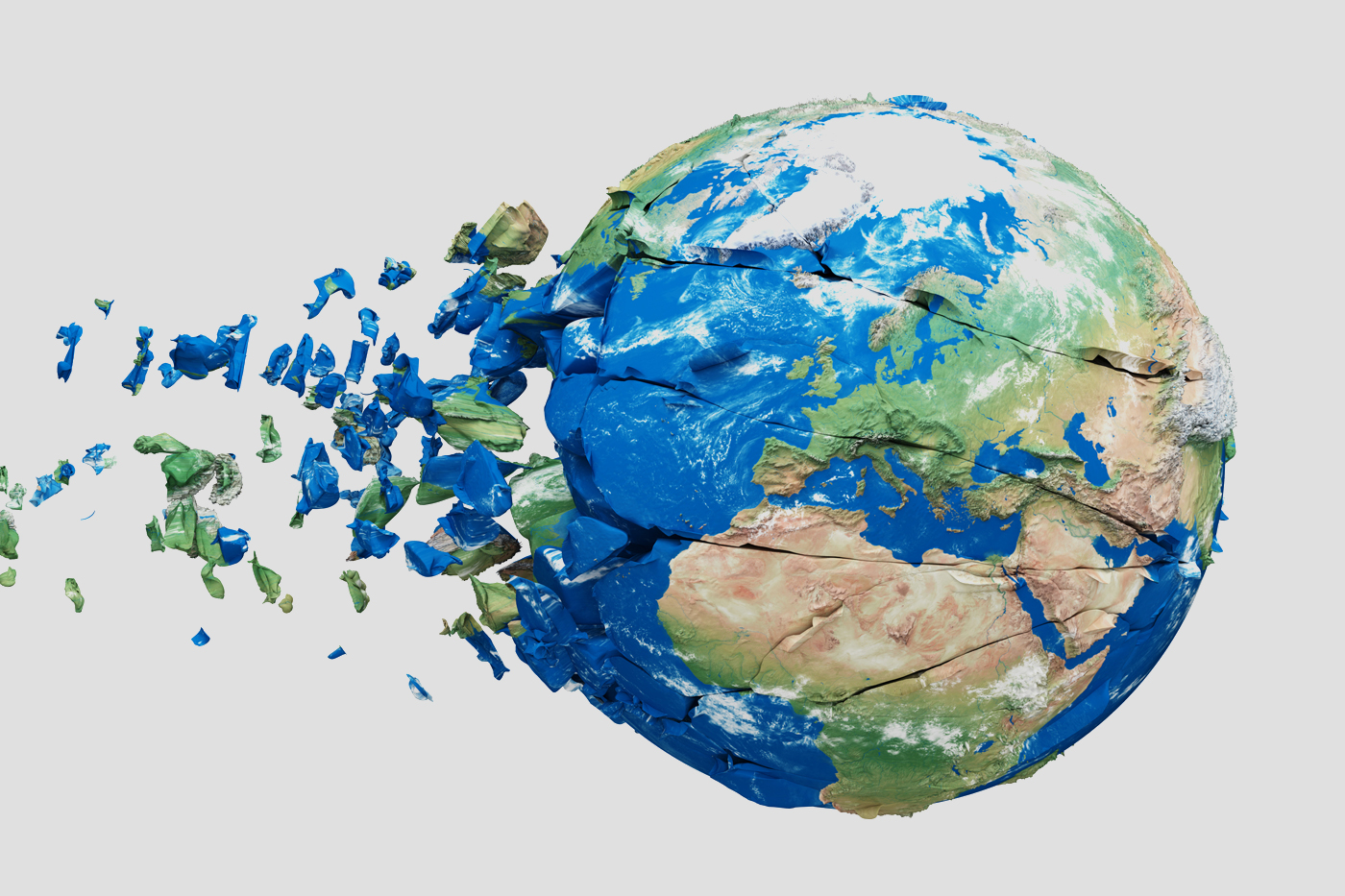 By Chartered Banker Institute
In the past 16 years alone, the world has lurched from a global financial crisis to a climate crisis to a pandemic to a cost-of-living crisis. The world has experienced unprecedented weather-based activity – ranging from droughts and floods to devastating wildfires – and has recently felt the very real threats of slow growth, superpower rivalry and a potential third world war.
In late 2022, Columbia scholar and Financial Times contributor Adam Tooze popularised the term polycrisis, which describes the simultaneous and overlapping crises facing the world today.
“If you’ve been feeling confused and as though everything is impacting on you all at the same time” he said, “this is not a personal, private experience. This is actually a collective experience.”
The roots of the word polycrisis, according to Tooze, come from an idea that was launched by French theorist Edgar Morin, which was then picked up by Jean-Claude Juncker, the President of the European Commission, in 2016.
Juncker was describing the challenge of governing Europe in the face of the Greek debt catastrophe in the aftermath of the 2008 global crisis, Putin’s initial aggression against Ukraine in 2014 and the refugee emergency in Syria triggered by the violent state crackdown in March 2011, which spilled over into Europe, all against the backdrop of Brexit. But it was at the annual meeting of The World Economic Forum in 2023, often referred to as Davos, where, prompted by our most recent combination of worldwide emergencies, the word came to the attention of those within corporate risk.
David Coleman, Vice President, Chief Risk Officer, European Bank for Reconstruction and Development, states that a huge challenge that we face today is the fact that ironically, despite globalisation in terms of trade, we live in a much more fractious and fragmented world than ever before.
“For a long period of time, there’s been hegemony in the greater part of the world. But this seems to be breaking down, and we’re seeing a possible retreat from globalisation. This, in turn, means that our supply chain has to be reoriented, which will do damage to prosperity.
“It will also mean that there’s less cohesion around tackling the big problems that we need to come together to solve.”
Joshua Tucker, Senior Geopolitical Adviser, Kroll, agrees.
“It looks like we’re on the precipice of an end of an era and the beginning of new one. This particular period started at the end of the Cold War in the 1990s when we saw the rising dominance of the United States and the West. They were setting general rules of global order in a way that had not been seen during the Cold War, when we had these competing great powers.
“In the background, we had the rise of China. But for a while there, if a nation wanted to be part of the international system, it meant playing ball with the Western order. We saw, for example, the rise of elections around the world because elections were part of the Western order, even if they weren’t competitive, free and fair.”
On a positive note, however, Tucker explains that a decline in geopolitical conflict occurred over the ensuing three decades. “It didn’t go away entirely,” he points out. “But compared with what came before, this was a calmer period.
“But now, 30 to 35 years later, we’re seeing a fraying of that global order – of Pax Americana. And instead, there are myriad different events happening in lots of different parts of the world – the most obvious being the rise of China, which is sometimes a global rival and sometimes a partner to the United States.”
Greg Jones, Chief Risk Officer, Europe and Asia Region, TD Securities, points out: “Today, China is the powerhouse that fuels the global economy. If we interfere with that, we know that there will be a great deal of sensitivity across all related markets and what the consequences of that may be.
“But what sits above that is the forthcoming [at the time of print] US election. On an economic and financial scale, this is very much material. Because of course, the US is the primary market and if the election causes a sustainable boom in the US, that’s fantastic for global markets. But similarly, if something goes wrong, it’ll without a doubt damage them.”
Tucker explains that, today, we’re also seeing the US pivoting from thinking just about Europe to having to keep a close eye on much more. “We’ve seen Russia, which early on in the 1990s looked like it was going to be more of an ally of the West, morphing under Putin and becoming much more of an adversary. And we continue to see the volatility in the Middle Eastern region, and also in other parts of the world.”
He stresses that there are multiple global hotspots that we have to examine in order to see what the future holds and where conflict might break out. He also believes there are, in general, fewer constraints on state actors than we tend to have in more settled periods of time.
“We’re in this moment where we have a lower level of certainty around geopolitics than we’ve had previously,” he stresses, using Nagorno-Karabakh as an example. “This was an area of dispute between Azerbaijan and Armenia and it’s been frozen under conflict for about 30 years. Then, after Russia invaded Ukraine in 2022 and a conflict broke out in the Middle East in 2024 – right in the middle of all this, Azerbaijan just went in and grabbed the territory.”
In order to assess the key risk factors currently affecting the financial services sector, TD Securities’ Jones looks to some recent economic events. “We had a fantastic reaction to Covid-19 from the central banks,” he says. “They truly kept the financial industry and the economies on their feet. But then, as central banks and the regulators started to plan for the reversal of that, we ran straight into the liability-driven investment [LDI] episode, which was, of course, triggered by the Liz Truss and Kwasi Kwarteng mini-budget in September 2022.
“As we all know, this caused a strong market reaction and led to UK regulators looking at securities, financing transactions, fixed income and the market mechanisms that enabled this incident to happen.”
Within six months of this occurring, the world witnessed US regional bank distress with the failure of Silicon Valley Bank, Silvergate Bank and Signature Bank in March 2023. Credit Suisse also collapsed at the same time, but the cause was different. “Once again, we had the regulators looking at market structure,” recalls Jones. “And their reaction was to revert to cross-sectional reviews, which involves looking across the industry for the highest standards.
“It’s common, of course, for banks to be strong in some areas and slightly behind in others. But this doesn’t mean that they’re risky or that they’re not in control. It just means that they’re potentially not prepared for what might be around the corner.”
Jones explains that the regulators came under public scrutiny due to the severe nature of these events. “They, quite rightly, started to consolidate, and communication between them improved,” he says. “They have colleges, regulatory colleges, where they gather to examine current standards. They look at what they’re dissatisfied with and how the markets are operating. And when this happens, it leads to a sharp uplift in terms of expectations.”
Tucker points out that there are other global developments currently taking place that have geopolitical consequences without necessarily being straight geopolitics themselves.
Number one, he says, is climate change, and then there’s the huge question of how that is going to impact the flow of people.
“What is climate change, for example, going to do to people’s demand for resources? What is it going to do to the issues of food insecurity? And what is it going to do to migration?
“Then on top of that, we have demographic developments such as the ageing of Western societies and countries falling under the replacement level of population. How is this going to impact countries’ abilities, and what is that going to mean for the resources that different countries have to offer?
“It’s a complex world that we’re in at the moment,” he continues. “When we think about where we currently are, we can look to the hotspots in terms of geopolitical risks. Take Russia’s invasion of Ukraine two years ago, and what that did to scramble everything in Europe and scramble everything globally.
“Then in the Middle East, we thought there would be a rapprochement between Israel and Saudi Arabia, but that obviously became disrupted by the activities [Hamas’ attacks on Israel] of 7 October and its aftermath.”
Tucker continues by explaining that we now have a constant situation in the Middle East that continues to be a source of violence, as well as a source of uncertainty.
“We’re never sure if a full-scale war will break out between Israel and Iran or between Hezbollah and Israel and what’s going to happen there.
“Then we have the omnipresent question of what’s brewing in Southeast Asia, with continuing manoeuvring between China versus the US and its allies. And we’re also always looking at how Northeast Asian nations are positioning themselves in that regard.
“And finally, we have signs of growing cooperation between Russia, China, Iran, and North Korea – in various combinations – and the implications of these types of relationships for global stability.”
So, crucially, does all of this amount to a polycrisis?
Tucker says: “If you’re the United States of America right now, you have to watch what’s happening in Europe with Russia and you also have to watch what’s happening regarding the conflict in the Middle East.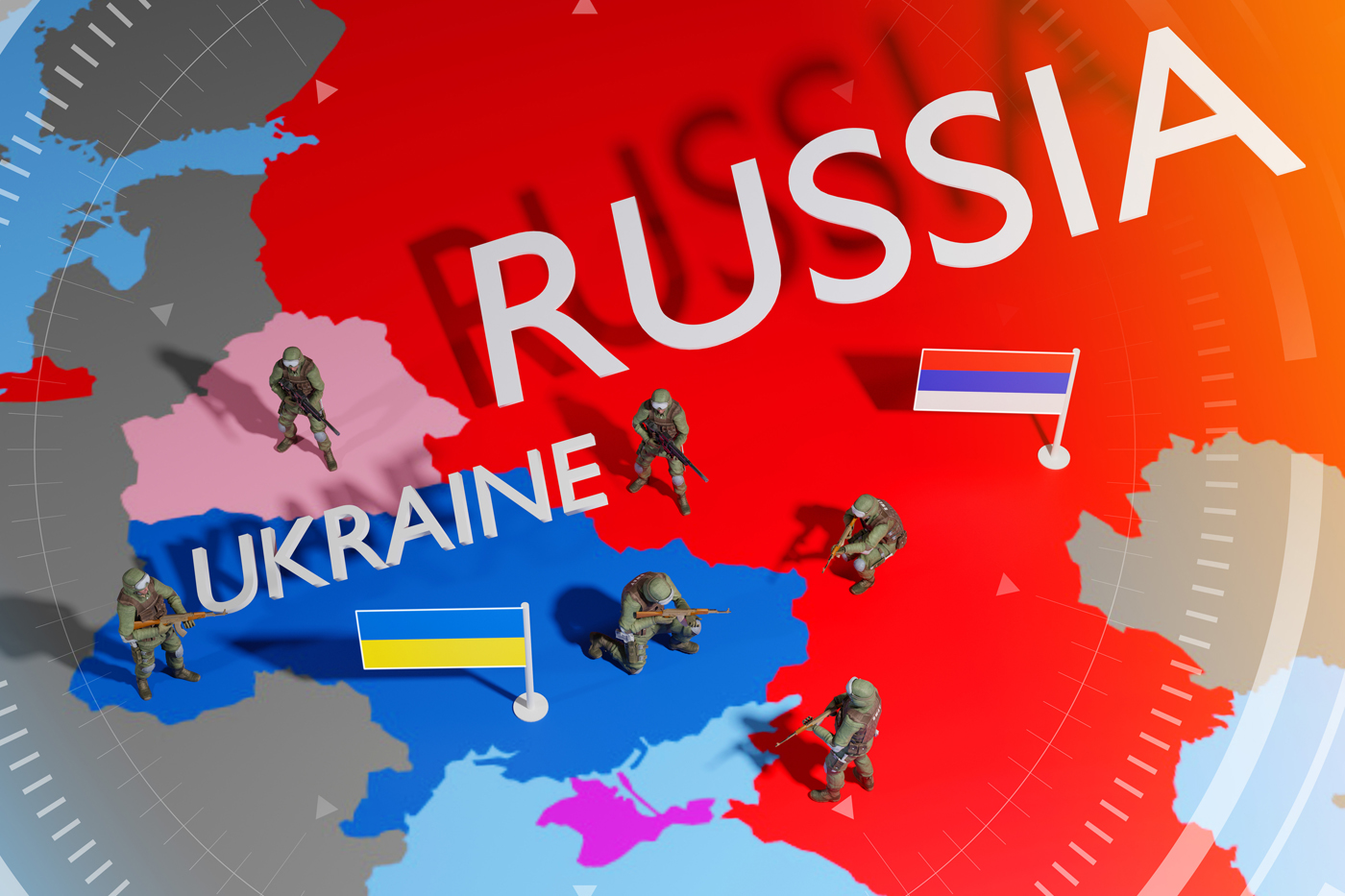
“You’re also constantly keeping an eye on what is transpiring in Southeast Asia. That’s because if a conflict broke out there, it could be an enormous concern for businesses globally – especially in the middle of the AI revolution with so much of the semiconductor industry and chip production going on in Taiwan.
“There’s so much alarming activity in other parts of the world, too,” he continues. “We’re at a point in geopolitics where there are multiple areas of conflict that have the potential to impact businesses, communities, transport, credit risks and much more.”
Take, for example, the recent disruption caused by Houthi rebels launching attacks in the Red Sea – a relatively small-scale intervention by a non-state actor that has caused large-scale disruption in shipping routes.
“It’s definitely poly, in the sense that there are a number of events taking place across the globe that contribute to risk and that feed on each other in some ways. But I’m not entirely sure if it amounts to a crisis.”
This article previously appeared in Issue 2 2024 of Chartered Banker, UK.