Insights – June 2026
 by
by 
On 16 May 2026, the Asian Institute of Chartered Bankers (the Institute) honoured more than 700 banking professionals at its 9th Chartered Banker Conferment Ceremony, reaffirming the importance of professionalism, ethics and continuous learning in an industry undergoing rapid transformation. Held at the Kuala Lumpur Convention Centre, the ceremony recognised seven new Fellow Chartered Bankers, 114 Chartered Bankers, and 611 Associate Chartered Bankers, alongside recipients of the Excellence and Corporate Awards.
The event brought together industry leaders, regulators and banking professionals to celebrate achievements while reflecting on the evolving responsibilities of the profession. In his address, the Institute’s Chairman Tan Sri Azman Hashim, FCB, underscored that banking is ultimately built on public confidence.
He signalled that today’s recipients were being recognised not merely for academic achievement, but for their commitment to “standards, discipline and the values that uphold the dignity and purpose of this profession.”
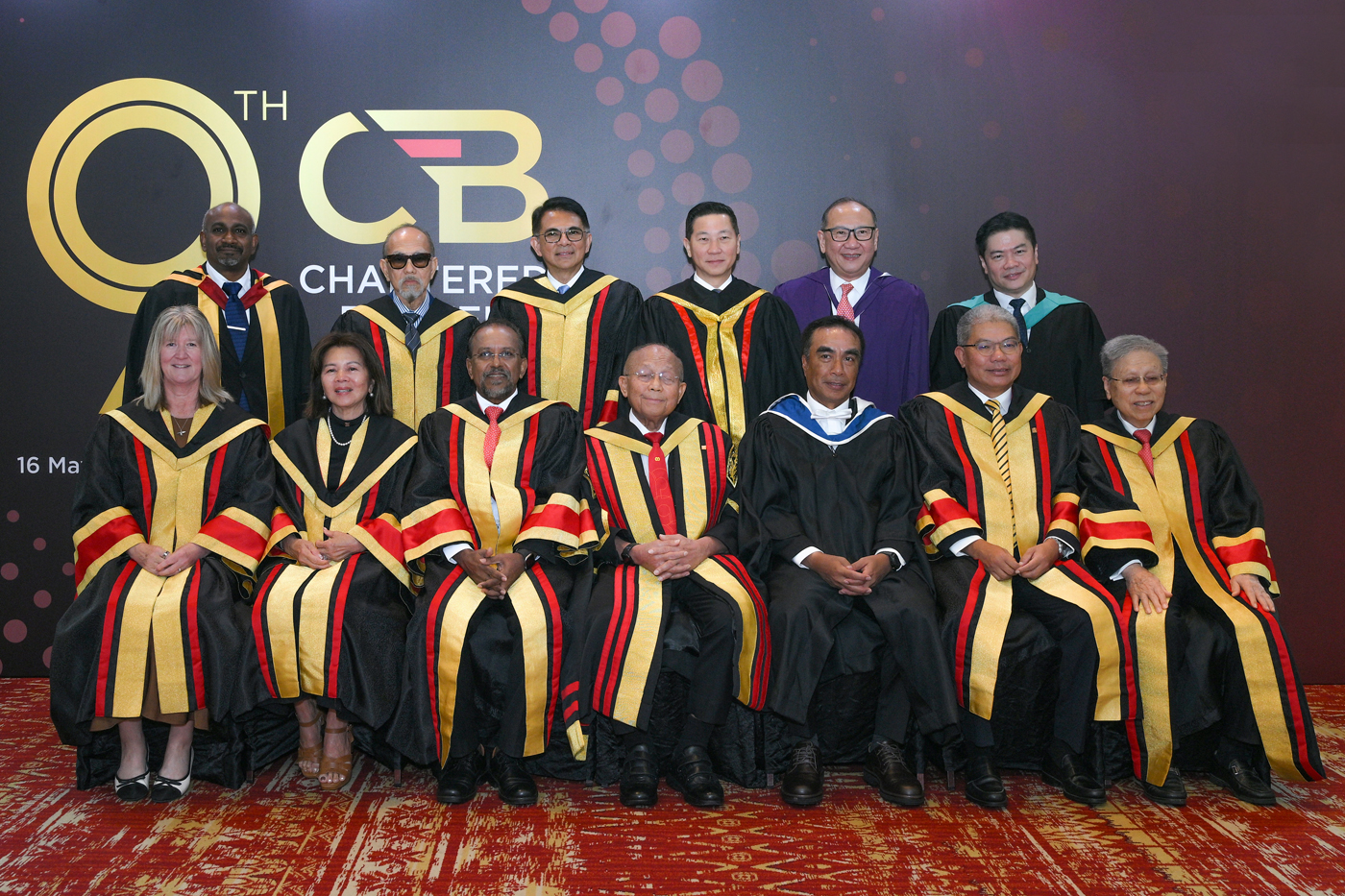
“Behind every account is a human story, and behind every human story is trust,” he said, describing the Chartered Banker designation as “a mark of professionalism, ethical conduct and lifelong learning.”
Tan Sri Azman noted that in an era marked by the rapid development of generative artificial intelligence, digital currencies, and fintech innovation, bankers must remain adaptive and future-ready by staying anchored to enduring values. He reminded recipients that whilst technology continues to reshape finance, “technology can enhance judgement, but it cannot replace conscience.”
Representing Bank Negara Malaysia, Deputy Governor Adnan Zaylani Mohamad Zahid too highlighted the growing importance of professionalism as the financial sector embraces technological change. In his special address, he stressed that the industry’s future success would depend not only on innovation and technical capability, but also on maintaining public trust and responsible stewardship in an increasingly digital environment.
The central bank’s message reinforced the need for bankers to combine strong ethical foundations with the skills required to navigate emerging technologies and changing customer expectations.
The conferment also showcased the Institute’s broader efforts to strengthen industry capability through initiatives such as the Future Skills Framework and FSF Xcel skills assessment platform (read our latest findings on this in Primed for the Future on page 42) and collaborations with the UK Chartered Banker Institute.
The AICB Code of Professional Conduct expresses the tenets of ethical and professional conduct which all conferred members must uphold in executing the privileges of their office, including acting with honesty and diligence, avoiding disrepute, and prioritising public interest.

The space for unregistered and opaque crypto activity is shrinking, as enforcement tightens on how digital assets are traded. Over the past months, regulators have taken a more assertive step in tackling illicit cryptocurrency activity, signalling a broader shift towards stricter oversight of the digital asset sector.
At the centre of these investigations is peer-to-peer (P2P) crypto trading, where individuals buy and sell digital assets directly without using registered exchanges, creating opportunities for money laundering and other illicit activities.
In latest developments, a landmark joint operation this April between the UK Financial Conduct Authority, police, and tax authorities, raided eight London properties linked to suspected illegal crypto trading. Earlier last year, the UK also convicted its first case of an individual running a network of illegal crypto automated teller machines. These crackdowns come ahead of the UK’s more comprehensive regulatory regime on digital assets set to take effect in 2027.
Similar enforcement momentum is evident across the Asia-Pacific region. In recent months, authorities in countries including Japan, South Korea, and Australia have tightened their licensing regimes and reclassified crypto assets under stricter financial laws. China has gone further, reinforcing an outright ban on unauthorised crypto activity and expanding restrictions to include offshore token issuance and stablecoins, backed by coordinated action from multiple agencies.
This follows similar moves in Southeast Asia where last year’s Banking Insight cover story, Southeast Asia’s Scam States: Fire in the Belly to Wrest This Beast, highlighted how global law enforcement and regulators are bringing down large-scale crypto-enabled scam networks in Cambodia, Vietnam, and Timor-Leste.
It reflects a broader global trend: regulators are no longer treating crypto as a fringe sector but as an integral part of the financial system that must adhere to established rules.
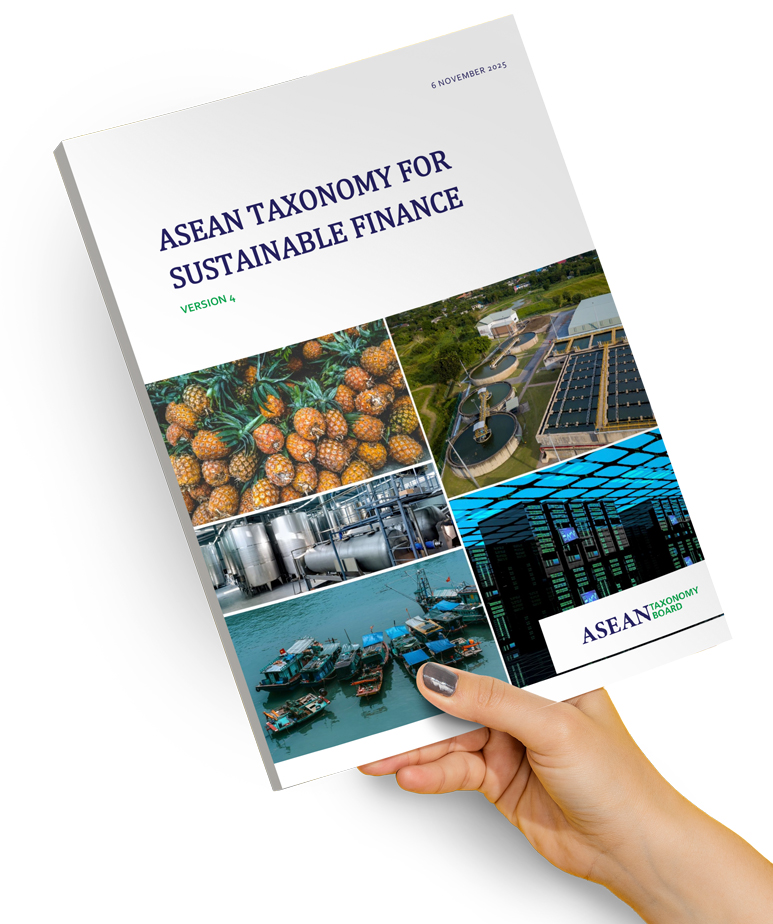
The release of the ASEAN Taxonomy for Sustainable Finance Version 4 in November 2025 marks a major milestone in the region’s sustainable finance agenda. Developed by the ASEAN Taxonomy Board (ATB) after several iterative versions since 2021, Version 4 represents the completion of a comprehensive, region-wide classification system for sustainable economic activities. It was designed to provide a common language for governments, financial institutions, and investors to identify and channel capital toward environmentally sustainable and transition activities.
A key achievement of Version 4 is the full operationalisation of the ‘Plus Standard’, which now covers six focus sectors and three enabling sectors that collectively account for the majority of greenhouse gas emissions in ASEAN. The update introduces technical screening criteria for previously uncovered sectors such as agriculture, manufacturing, and waste management, as well as enabling sectors like information and communication and professional services. The taxonomy now offers complete sectoral coverage, enhancing its usability and credibility.
Mardini Eddie, Chair of the ATB, said in an Asian Development Bank-released video: “From the start, the ASEAN Taxonomy was designed to be inclusive and interoperable. It recognises that ASEAN member states are at different stages of development and provides flexible pathways towards one shared destination. With the completion of Version 4, ASEAN now shares a common language for sustainable finance, a tool that embodies credibility, transparency, and inclusivity. It supports our shared vision of a sustainable, resilient, and prosperous ASEAN.”
Importantly, Version 4 aligns with global frameworks such as the EU Taxonomy while remaining tailored to ASEAN’s diverse economic contexts. Its design supports both green activities and transitional pathways, reflecting the region’s need for a pragmatic shift toward low-carbon development.
With development complete, the focus now shifts to implementation, capacity building, and adoption, positioning the taxonomy as a central tool in advancing sustainable finance across Southeast Asia.
At a time when some leaders of major economies are pushing for deregulation of the financial sector, the International Monetary Fund (IMF) has said that inflation arising from the global energy shock strengthens the case for continued reforms.

During a press briefing this April to mark the global lender’s biannual Regional Outlook for Asia and the Pacific report, Krishna Srinivasan, Director of the Asia and Pacific at the IMF, said: “We have been calling across Asia for stronger social safety nets that would make it easier to protect vulnerable households without relying on generalised subsidies, stronger domestic final demand, and deeper regional integration that would reduce dependence on external demand and improve resilience to external shocks.”
The global lender emphasised that the rising vulnerabilities from inflation, tighter liquidity, and external shocks make financial stability increasingly dependent on cautious monetary policy, targeted fiscal support, and strong supervisory oversight.
“This shock strengthens the case for structural reform. It does not weaken it.”
He also advocated for uninterrupted sustainability financing towards “investments in alternative energy sources, energy efficiency, and power grids, and that would reduce vulnerability to future fuel import shocks” as higher energy prices can quickly trigger new support measures and make existing subsidies more expensive.
The near-term objective, Srinivasan said, is to absorb shocks whilst preserving price signals and policy credibility. The end goal is to build a more resilient, balanced, and inclusive model for global growth.