Navigating the Intersection of Nature, Finance, and Human Rights: The Adoption of TNFD by Financial Institutions and Companies in Malaysia
Taking a ‘whole-of-society’ approach is essential.
 by
by 
Taking a ‘whole-of-society’ approach is essential.
by  By Divyaasiny R Rajaghantham, Koong Hui Yein, and Fatin Zani
In 2019, Malaysia lost its last Sumatran rhino, and with fewer than 150 Malayan tigers remaining, the nation’s biodiversity decline mirrors a global crisis. The World Wide Fund for Nature’s (WWF) Living Planet Report reveals a staggering 73% decline in wildlife populations from 1970 to 2020. Overexploitation of natural resources has led to the loss of half the world’s corals and 40% of forests annually. This decline threatens not only ecological balance but also human well-being as we rely on ecosystem services like water, food, and climate regulation — essential for economies. Studies indicate that over half of the world’s gross domestic product (GDP) is moderately or highly dependent on nature, rendering businesses and financial institutions vulnerable to ecosystem degradation.
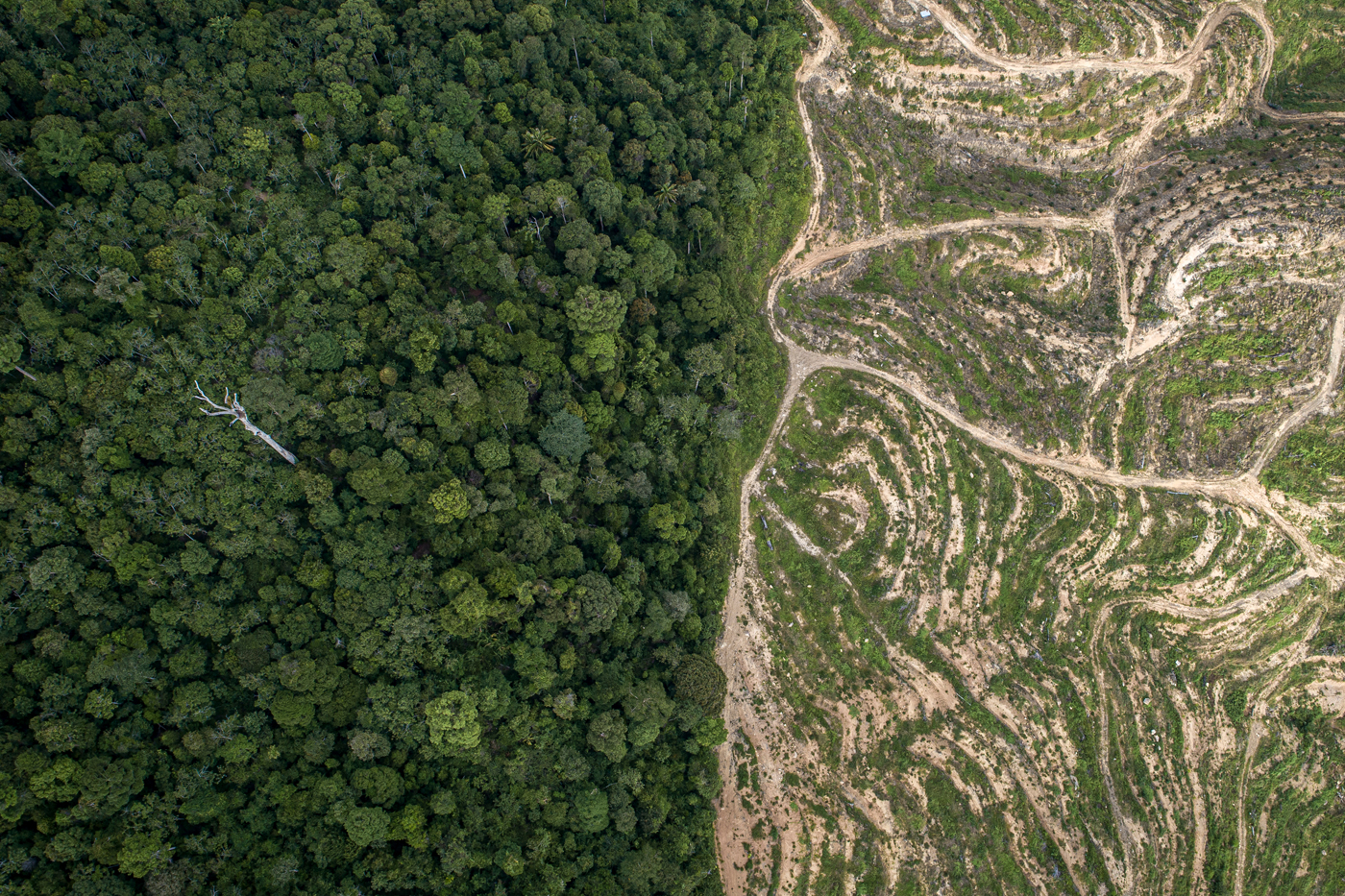
For Malaysia, a mega-diverse country, the stakes are high. Mangroves, covering over 600,000 hectares of the coastline, provide essential services like storm surge protection, carbon sequestration, and fishery support, saving the government billions in avoided flood and storm damage costs. The Ulu Muda Forest Complex, another critical asset, supplies 90% of Kedah’s water, 80% of Penang’s, and 40% of Perlis’, securing food production in Malaysia’s ‘rice bowl’ while meeting domestic, industrial, and commercial needs, supporting the livelihoods of over 4,900 villagers. A World Bank study forecasts that even a partial ecosystem collapse could reduce Malaysia’s GDP by 6% annually by 2030. Furthermore, a WWF-Malaysia study using the Biodiversity Risk Filter reveals that seven of Malaysia’s top 20 companies on the FTSE Bursa Malaysia KLCI, particularly in agriculture, healthcare, and energy, face high risk from extreme weather events, potentially disrupting supply chains, raising operational costs, and destabilising the economy.
Amidst growing nature loss concerns, Malaysia has taken steps to strengthen biodiversity protection through policy direction and targeted initiatives. As one of the early adopters of the Kunming-Montreal Global Biodiversity Framework (GBF), Malaysia integrated the GBF’s goals into its National Biodiversity Strategy and Action Plan, releasing the National Policy on Biological Diversity 2022–2030 last year. At the 16th session of the Conference of the Parties (COP16), Malaysia reiterated its commitment to protect biodiversity, with plans to expand protected areas, advocate for nature-based solutions, address poaching and illegal logging, and enhance monitoring practices. While ongoing, these efforts reflect the government’s commitment to accountability in biodiversity efforts, aligning them with economic resilience and climate goals.
In parallel with government action, GBF’s Target 15 calls on the private sector to assess, disclose, and manage their nature-related dependencies, impacts, and risks by 2030. The Taskforce on Nature-related Financial Disclosures (TNFD) aligns with Target 15 by providing a framework for companies and financial institutions to assess and communicate their interaction with nature. The underlying idea is that corporations are more likely to protect nature as part of their business when they understand their dependency on it. For instance, a cocoa company may choose to invest in pollinator protection once it understands the impact of declining insect populations on its crop yields.
The TNFD, a market-led, government-supported, and science-based initiative, offers a risk management and disclosure framework for the private sector to manage their nature-related issues. Over 500 organisations have committed to TNFD-aligned risk management and corporate reporting. While still in its early adoption phase, momentum is growing in Malaysia – three corporations have signed on as TNFD Adopters, committing to prepare their nature-related disclosures by 2025. Additionally, Bank Negara Malaysia, a TNFD Forum member, is collaborating with the World Bank to develop nature-related financial risk assessment guides for the country’s financial institutions and businesses.
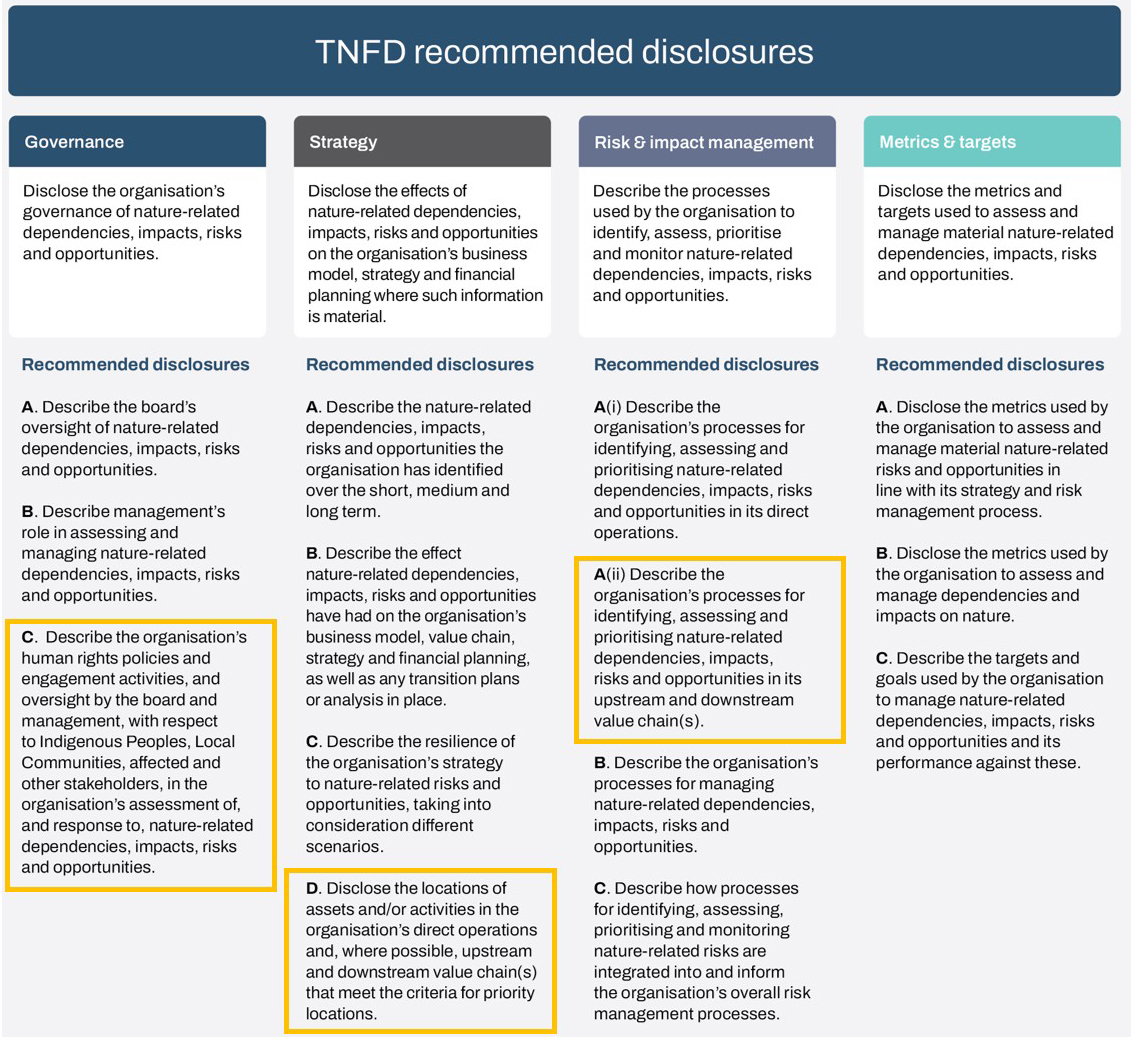
Recognising the climate-nature nexus, the TNFD builds extensively on the work of its sister initiative, the Task Force on Climate-related Financial Disclosures (TCFD). The TNFD adopts TCFD’s language and structure of governance, strategy, risk [and impact] management, and metrics and targets. The TNFD incorporates all 11 of the TCFD’s recommendations, recontextualised for nature for ease of adoption. To address the unique challenges of assessing nature-related risks, the TNFD has included three additional recommended disclosures addressing supply chains and human rights in nature risk assessments and the spatial specificity of nature risks.
With the rise of environmental, social, and governance (ESG) disclosure standards, interoperability between frameworks is pivotal for private sector adoption. The TNFD recommendations are consistent with the International Sustainability Standards Board’s (ISSB) International Financial Reporting Standards Sustainability Disclosure Standards, which serve as the global baseline for sustainability reporting. The ISSB has indicated its intention to incorporate nature-related corporate reporting requirements informed by TNFD’s work. Given ISSB’s foundational role in Malaysia’s newly announced National Sustainability Reporting Framework and considering global standards like the European Union Corporate Sustainability Reporting Directive, which mandates biodiversity reporting under the European Sustainability Reporting Standards E4 requirement, trends suggest that nature reporting requirements may soon mirror those for mandatory climate reporting. While TNFD remains voluntary for now, early adoption will enable Malaysian businesses to align with global standards, facilitating their transition to mandatory disclosures.
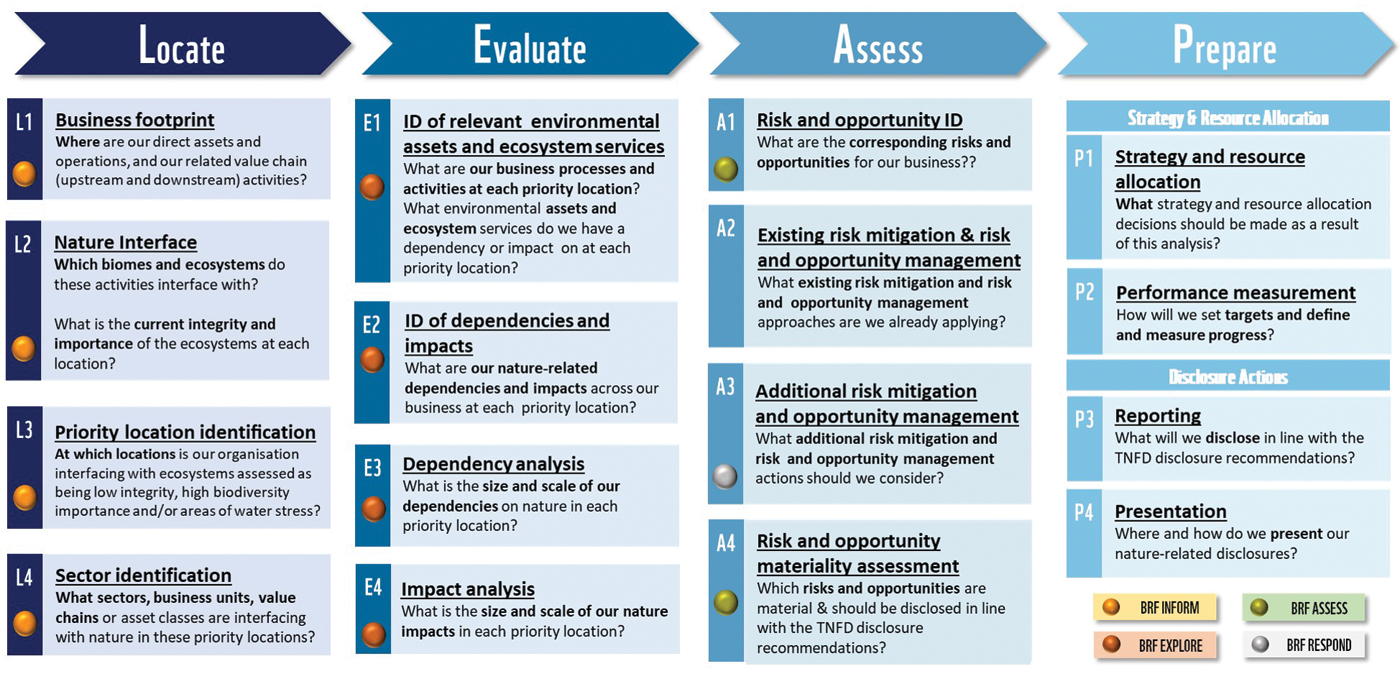
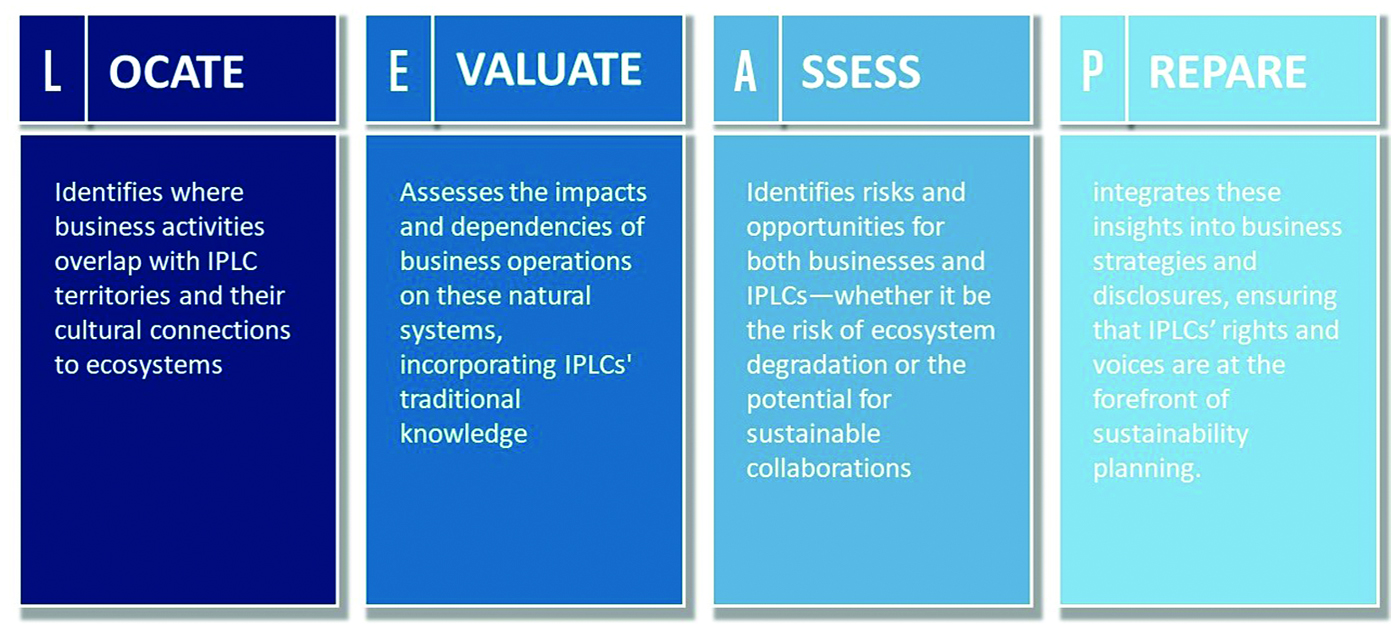
Recognising the difficulties of assessing nature-related risks, TNFD also developed the LEAP framework, which guides organisations through four phases (locate, evaluate, assess, and prepare). Each phase is supported by guiding questions to help businesses evaluate their dependencies on nature, assess risks and opportunities, and integrate these insights into their strategies and disclosures. Though not compulsory, the LEAP approach complements the TNFD framework, easing the disclosure process. Tools like Exploring Natural Capital Opportunities, Risks and Exposure (ENCORE) and WWF’s Risk Filter Suiteoffer accessible entry points for companies to understand material nature-related risks based on their sector and location.
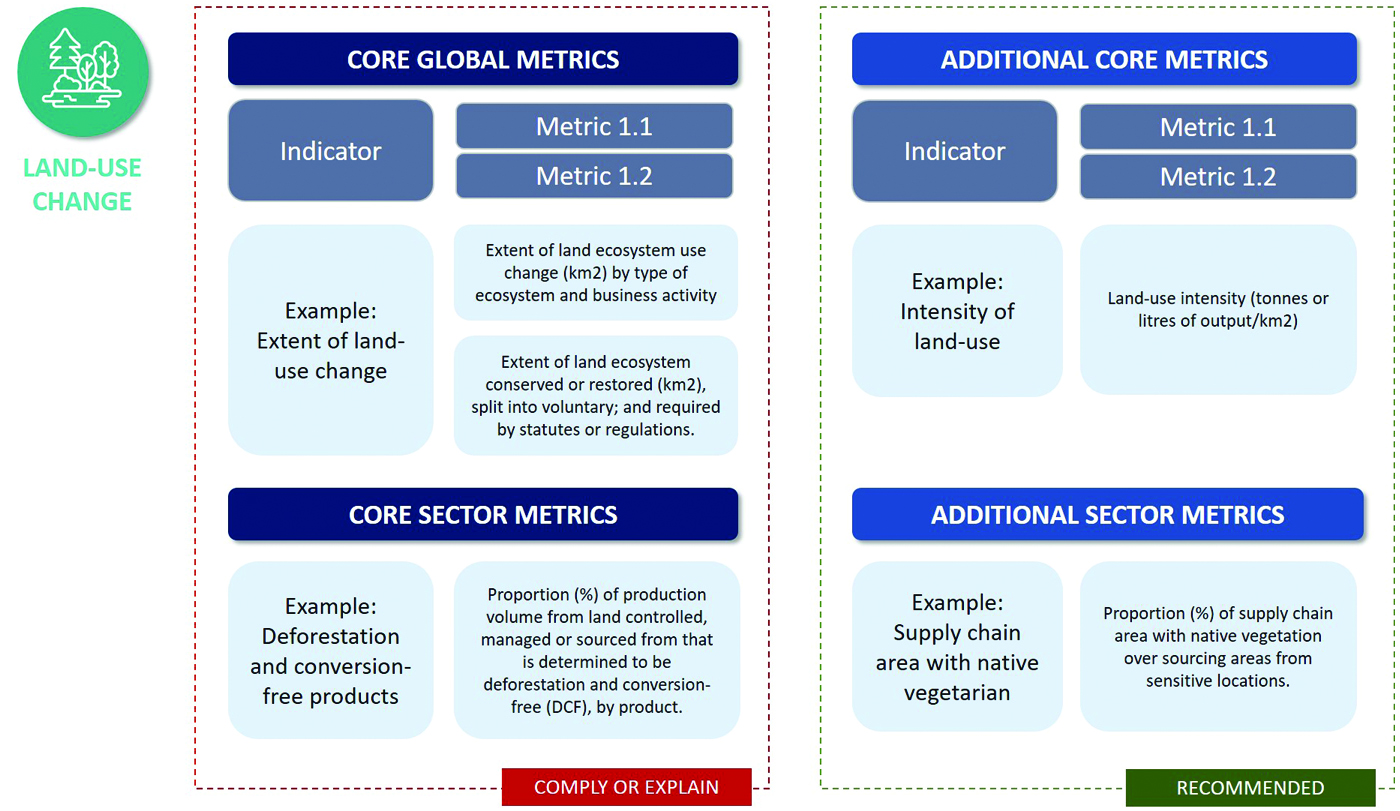
Metrics remain central for tracking progress. Unlike climate, which can be quantified by CO2 emissions, nature encompasses complex, multidimensional factors which cannot be reduced to a single metric. The TNFD’s initial survey reveals that companies are using over 3,000 metrics for their nature-related disclosures. To enhance comparability, TNFD distilled these metrics into ‘core global metrics’ applicable across all sectors and ‘core sector metrics’ tailored to specific industries, reported on a ‘comply or explain‘ basis, with additional metrics recommended to capture material nature-related issues as needed. Given nature’s unique characteristics and the growing demand for high-quality, timely, and assurable nature-related data, the TNFD announced at COP16 the release of a roadmap to improve market access to decision-useful data, which includes the development of an open-access Nature Data Public Facility in collaboration with partners like WWF.
In 2018, the indigenous Semai people of Kampung Ulu Geruntum in Perak took legal action against two companies and the state government for constructing a micro-hydro dam on their traditional land without consent. This dam potentially threatened the water source for hundreds of families and endangered vital natural resources for indigenous communities. Additionally, it posed a risk to the region’s ecotourism, impacting its rich biodiversity, including the Rafflesia flower, the world’s largest single bloom. The September 2024 ruling by the Ipoh High Court in favour of the Semai people serves as a critical reminder for businesses – even in clean sectors like renewable energy — of the necessity to respect indigenous rights, particularly the right to free, prior, and informed consent (FPIC), as we transition towards a lower-carbon and nature-positive economy.
People are an integral part of nature. Nature loss can pose a profound social crisis, particularly affecting indigenous peoples and local communities (IPLCs) who depend on biodiversity for food, water, and livelihoods. The IPLCs safeguard 24% of global above-ground carbon and 80% of biodiversity-rich territories, making their traditional knowledge vital in combating biodiversity loss. The GBF acknowledges the significance of IPLCs, promoting an inclusive, rights-based conservation approach that emphasises FPIC. According to the United Nations Declaration on the Rights of Indigenous Peoples, the right to FPIC empowers IPLCs to negotiate terms for projects impacting their lands, thereby safeguarding their rights and cultural heritage. For businesses and financial institutions, respecting FPIC is not merely a legal obligation; it is a moral imperative, promoting sustainable and ethical practices.
Building on the GBF’s principles, the TNFD emphasises the role of IPLCs in achieving sustainable, nature-positive outcomes. In addition to highlighting the role of engagement and human rights in its recommended disclosures, the TNFD released the Guidance on Engagement with Indigenous Peoples, Local Communities, and Affected Stakeholders. The document aims to help companies and financial institutions conduct meaningful engagements with IPLCs and affected stakeholders in nature-related risk assessments, ensuring their rights are upheld and insights are integrated into corporate decision-making. This approach mitigates risks while fostering long-term resilience for both nature and local communities.
While informative, the TNFD recognises that its guidance only addresses human rights issues related to nature, connected to an organisation’s business model and value chain. Although aligned, global standards such as the United Nations Guiding Principles on Business and Human Rights offer a broader framework for business to incorporate human rights and environmental due diligence into their operations. These principles obligate companies to respect human rights across their supply chains and to avoid contributing to abuses. By adopting proactive measures to prevent harm, businesses can uphold ethical standards and enhance their long-term sustainability and reputation in an increasingly socially conscious marketplace.
According to the 2024 WWF Sustainable Banking Assessment, only 36% of Malaysian banks have policies directing clients to obtain FPIC from affected communities and grievance mechanisms in place, suggesting a significant gap in effective implementation of FPIC within the financial sector. For businesses to remain competitive and ethical, they must balance growth with social and environmental responsibility, adhering to both local laws and international standards. Sectors like palm oil and timber face increasing scrutiny from international consumers who expect compliance with standards such as the Roundtable on Sustainable Palm Oil and the Forest Stewardship Council. These standards emphasise FPIC requirements, ensuring local communities are informed and consulted before development projects commence. However, implementation can vary widely with power imbalances, language barriers, and inadequate compensation compromising FPIC’s effectiveness in protecting indigenous rights and promoting sustainable development.
Despite these challenges, integrating the FPIC principles can unlock new opportunities. The Kuamut Rainforest Conservation Project in Sabah exemplifies a successful public-private partnership that engages local indigenous communities in land use and conservation planning. Through transparent communication and meaningful dialogue, the project fosters trust and collaboration, ensuring community rights and concerns are respected. The initiative demonstrates that by honouring indigenous rights and engaging the correct partners, FPIC can be effectively integrated into project design and execution, leading to successful outcomes.
As we transition towards net-zero and nature-positive development, businesses and financial institutions must acknowledge that addressing both nature loss and human rights is vital for sustainable growth. A ‘whole-of-society’ approach, involving businesses, financial institutions, civil societies, and public entities, is essential. Frameworks like the TNFD and FPIC can help guide the private sector in navigating the complexities of nature, finance, and human rights, while proactively aligning with emerging trends to meet evolving ESG disclosure requirements and growing policy expectations. By safeguarding natural ecosystems and upholding indigenous rights, businesses can mitigate risks and seize new opportunities, building a future where people and nature thrive together.
Divyaasiny R Rajaghantham, Koong Hui Yein, and Fatin Zani are part of the Sustainable Finance team at WWF-Malaysia. Together, they support sustainable finance initiatives in collaboration with regulatory authorities, financial institutions and companies, driving the integration of ESG policies in the sector.