‘We Are Witnessing A Catastrophic Plunge Into Kleptocracy’
Economist takes aim at deeper dynamics in an era of increasing global instability.
 by
by 
Economist takes aim at deeper dynamics in an era of increasing global instability.
by  By the Banking Insight Reporting Team
Yanis Varoufakis is synonymous with social resistance, economic revolution, and financial rebellion. As an economist and activist, he has shifted the landscape of politics and economies. His tenure as the ex-finance minister for Greece at the height of the Greek Debt Crisis put him dead centre in debt negotiations with the so-called financial Troika – the International Monetary Fund, European Central Bank, European Commission – to secure “an agreement that involves debt restructuring, less austerity, redistribution in favour of the needy, and real reforms.”
This did not happen. Despite Greek voters’ historic referendum and decisive rejection of the proposed international bailout conditions, Varoufakis resigned just hours after this victory as other eurozone finance ministers had reportedly pressured the then Prime Minister Alexis Tsipras for his ‘absence’ from future negotiations. The Hellenic Republic ultimately accepted a three-year bailout on terms that were significantly harsher than the ones initially rejected by voters.
As a bestselling author and forceful speaker – including his panel discussion at the recent MyFintech Week 2025 co-organised by the Bank Negara Malaysia, Securities Commission, AICB, and Malaysian Digital Economy Cooperation – Varoufakis continues to call a spade a spade and hold power to account for the common good.
Q: Reflecting on your tenure as arguably Greece’s most controversial yet recognisable finance minister, what personal toll did that period have on you and what gave you the strength to stand firm when the political and financial pressure was at its peak?
Allow me to begin answering your question with a comment regarding my, usual, characterisation as ‘controversial’. It has been said so often that it appears trivially true. But what was so controversial about my stance?
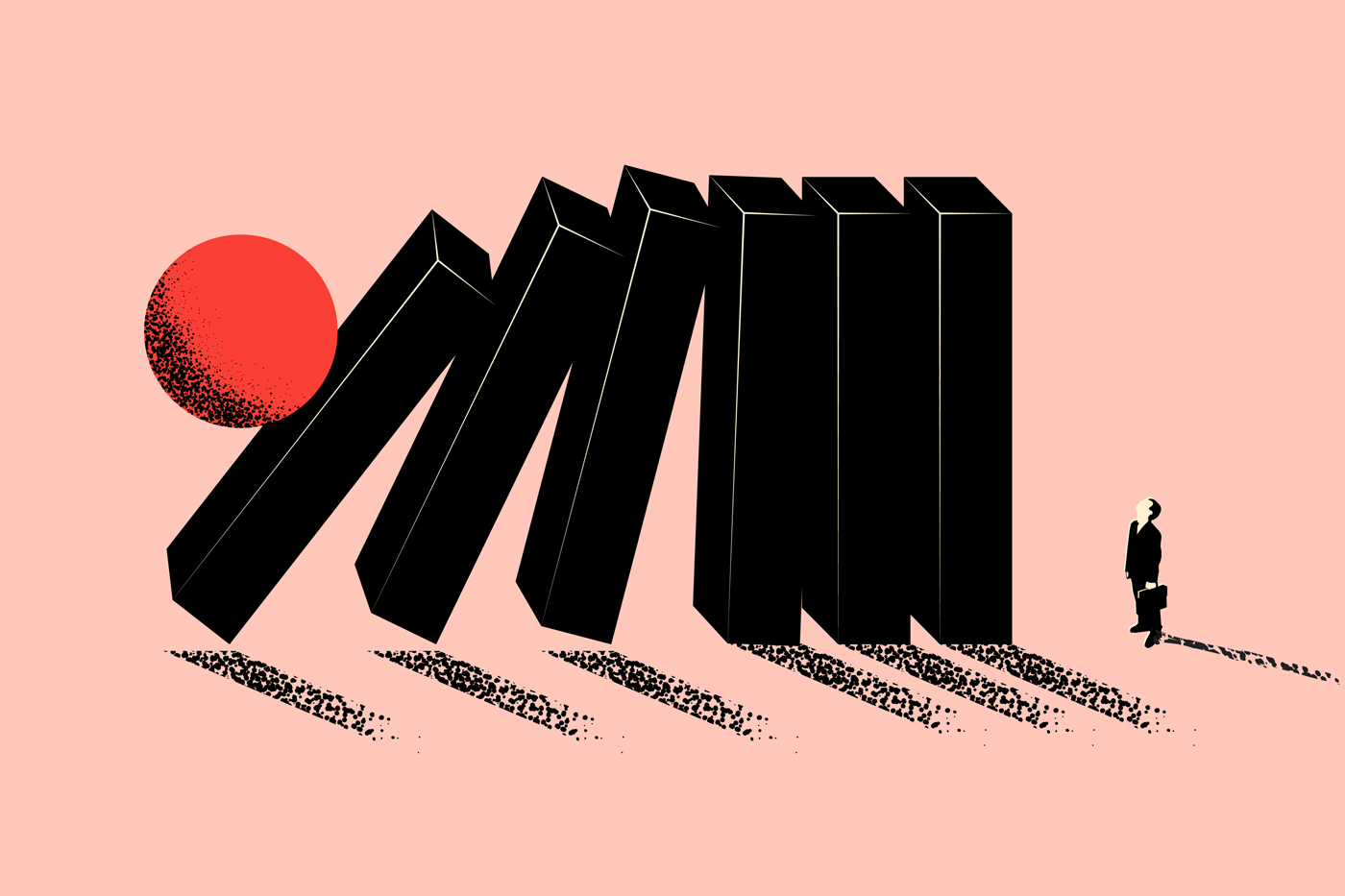
As the finance minister of a bankrupt state, I insisted that we did not have the right to borrow more on conditions that would shrink our disposable incomes further. One might have thought that this ought to be an uncontroversial stance. That it was presented as controversial, radical, insufferable even (to our creditors) is a sign of how deep, even irreversible, the euro crisis had become. And why Europe is, today, deindustrialising and becoming geopolitically irrelevant.
As for the source of my determination not to succumb to the demonisation that was unleashed against me, the answer is simple: common people out there, on the street, patting me on the back (to this day), thanking me for not putting my political career above the promise not to betray them.
Q: You’ve been a consistent advocate for more inclusive financial structures and policies, prioritising social justice in tandem with economic efficiency. As we’re seeing private credit funds increasingly become major lenders, does this shift in credit source strike you as an evolution or reversal of more inclusive finance?
I would put it far more strongly than that; it is not just a ‘reversal’ that we are witnessing but a catastrophic plunge into a kleptocratic regime.
Private equity and credit funds have become calculated destroyers of value. They buy schools, hospitals, water companies. They split them up into two companies, one owning the real estate and another (that now needs to pay rents to the former) owning the labour and customer contracts. Then they lump debts on the first company (money with which they line their own pockets) and increase the rent the second company pays to the first, demanding of workers to reduce their pay while the services provided to customers deteriorate.
This is a quasi-sophisticated form of theft that enriches some by defrauding workers and customers. Rather than a mere ‘reversal’, this is a plunge into a moral void that destroys considerable economic value.
Q: Many ASEAN economies remain deeply tied to the US trade and dollar system. From your perspective, does this dependence undermine financial sovereignty?
Of course. Dependence on the currency of a hegemon means that your interest rates will be determined not by the conditions of your domestic money and goods market but by the whims of the hegemon. This comes with large-scale deadweight losses for your own economy.
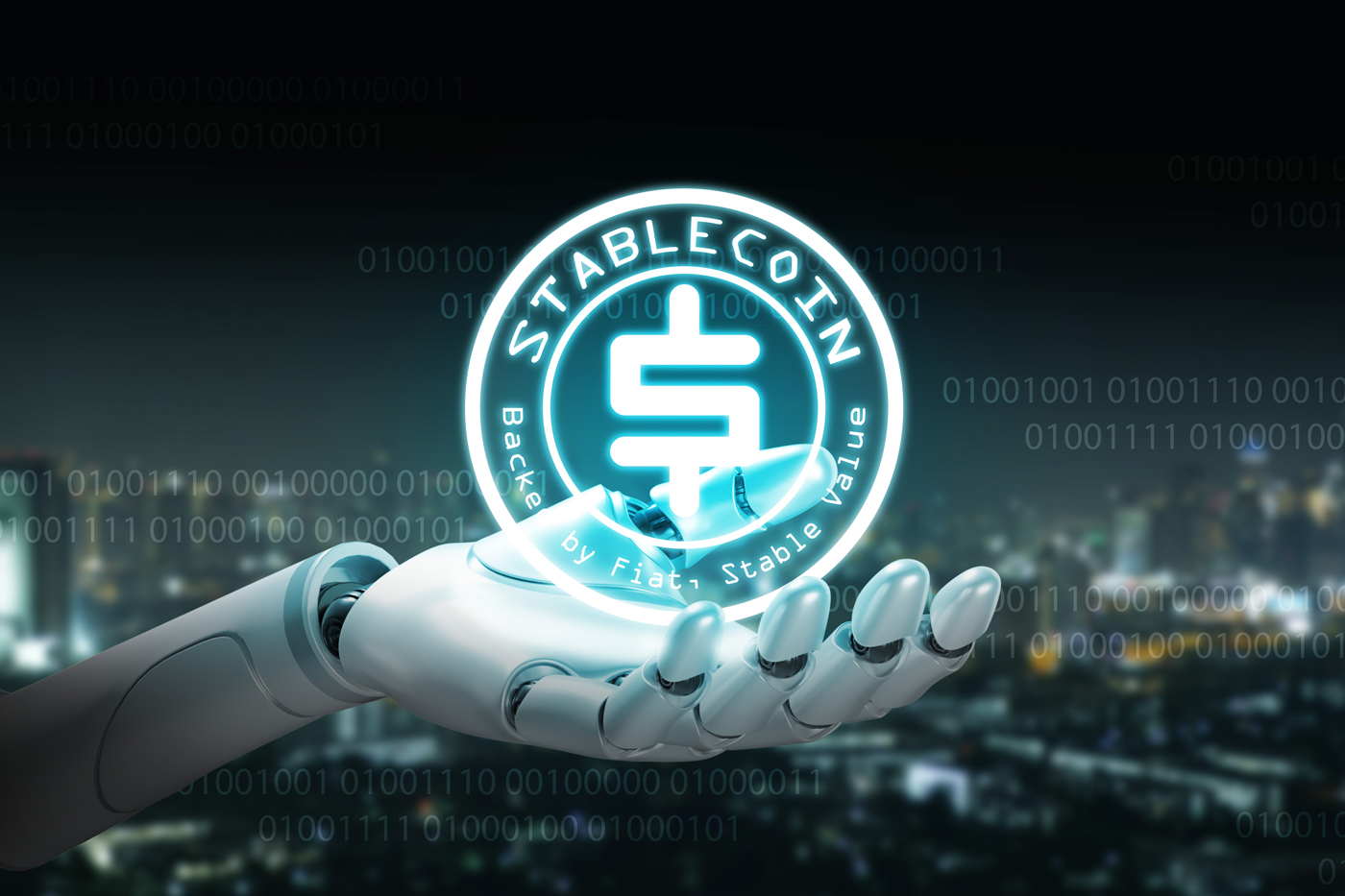
Moreover, and this is something the ASEAN countries must consider with the utmost seriousness, the Donald Trump administration’s commitment massively to expand the use of US-denominated stablecoins, e.g. through the so-called GENIUS (Guiding and Establishing National Innovation for US Stablecoins) Act will increase considerably both ASEAN’s dependence on privatised versions of the US dollar.
What this means is that your central banks will lose much of the control they still have over your money supply. Even worse, it also means that if these stablecoins suffer the equivalent of a bank run (i.e. owners of stablecoins rush to convert them into normal dollars), millions of Southeast Asian firms and households will suffer a meltdown of their deposits since these stablecoins are not backed by any central bank – not even the US Federal Reserve.
Q: Could initiatives like central bank digital currencies or non-sovereign, blockchain-based BRICS (Brazil, Russia, India, China, and South Africa) trade tokens move the needle in the other direction?
Yes, of course. This is why the US authorities are so hostile to BRICS Pay and any digital payments system that Washington cannot control. Having said that, the greatest ally of the US dollar is the fact that, despite Trump’s tariffs, Southeast Asian and Chinese exporters still rely on the US trade deficit for a large part of the aggregate demand for their exports.
As long as this is so, the BRICS-related payments systems will not threaten the US dollar, or its privatised version (the US-denominated stablecoins).

Q: How should banks contribute to a climate-conscious financial system without falling into what you’ve called the ‘greenwashing trap’?
They can’t. As long as their fiduciary responsibility is toward their shareholders, banks will be drawn to lending that is detrimental to our planet’s capacity to keep humanity alive. Put differently, as long as our governments continue to subsidise fossil fuels and to refuse to introduce serious levels of carbon taxes, banks will continue to fund the climate catastrophe – and to think that they can be the solution is, at best, naïve.
Only public investment banks and vehicles can help fund the green transition. But that takes political will and a capacity of our political systems to clash with the interests of a tiny, but supremely powerful, oligarchy.
Q: If you could redesign global banking and financial architecture, what would a Varoufakis model of it look like?
I would create a monetary commons.
Effectively, we would all have the right to open a digital wallet (or account) with our central bank (e.g. by downloading an app made available by the central bank) that allows us to make free, instantaneous payments on a secure distributed ledger while receiving the overnight central bank interest rate on our deposits. Then, commercial banks would have to offer us a better deal for our deposits and restrict themselves to the role of intermediaries (i.e. full reserve lending of deposits mostly held on the central bank).
The added bonus to society would be that, in the context of this monetary commons, a universal basic dividend could be paid to everyone. See https://monetarycommons.com/ for more.