Leading in the New Norm
Human-centred leadership, AI, and the future of banking talent.
 by
by 
Human-centred leadership, AI, and the future of banking talent.
by 
By Prof Dr Manivanan Saman
The banking industry is entering one of the most transformative periods in modern history.
For decades, banking leaders operated within relatively stable models of growth, talent development, customer engagement, and operational structures. Today, that stability has fundamentally shifted. Uncertainty, disruption, artificial intelligence (AI), geopolitical fragmentation, climate transition, digital acceleration, cybersecurity threats, changing workforce expectations, and demographic shifts are no longer temporary challenges – they have become the permanent operating environment for financial institutions.
This is the ‘new norm’.
The future of banking will not be determined solely by balance sheets, technology investments, or product innovation. Increasingly, it will be shaped by how effectively institutions develop future-ready talent, build adaptive leadership cultures, and balance technological advancement with human intelligence.
The question facing banking leaders today is no longer whether change will happen. The real question is whether institutions can develop leaders and workforces capable of continuously adapting to relentless change.
The banking sector is simultaneously experiencing multiple transformations at an unprecedented speed.
AI is reshaping customer service, compliance monitoring, fraud detection, credit assessments, learning systems, and operational efficiencies. Digital banks and fintech ecosystems continue to challenge traditional banking models. Sustainability and environmental, social, and governance (ESG) expectations are redefining risk management and investment priorities. Meanwhile, geopolitical tensions and economic fragmentation are creating new uncertainties in global markets.
At the same time, workforce transformation is accelerating.
For the first time in history, up to five generations are co-existing in the workplace. Gen Z has already entered the banking industry in significant numbers, while Generation Alpha will soon follow. These generations bring fundamentally different expectations around leadership, work flexibility, technology integration, purpose-driven careers, learning models, and organisational culture.

Traditional command-and-control leadership models are increasingly becoming ineffective in such an environment.
Future banking leaders must become highly agile, adaptive, collaborative, technologically literate, emotionally intelligent, and capable of leading across generational and cultural diversity.
In many ways, leadership itself is being redefined.
AI Will Transform Banking – But Humans Will Define Its Success
AI is undoubtedly one of the greatest disruptors the banking industry has ever encountered.
The opportunities are enormous.
AI can improve operational efficiency, accelerate decision-making, enhance fraud prevention, strengthen regulatory compliance, personalise customer experiences, and optimise workforce productivity. Generative AI, predictive analytics, machine learning, and intelligent automation are already changing how banks operate globally.
However, one of the biggest misconceptions surrounding AI is the belief that technology alone will solve organisational challenges.
Technology without human capability becomes a risk rather than an advantage.
As banks adopt AI at scale, institutions will increasingly require leaders and employees who possess critical human capabilities that machines cannot fully replicate – strategic judgment, ethical reasoning, empathy, creativity, adaptability, communication, stakeholder management, and complex decision-making under uncertainty.
The future workforce therefore requires a new balance between ‘hi-tech’ and ‘hi-touch’.
Banking institutions that over-focus on automation without strengthening human capability may achieve short-term efficiencies but risk long-term cultural fragmentation, leadership gaps, ethical blind spots, and weakened customer trust.
In contrast, organisations that successfully integrate AI while strengthening human intelligence will build sustainable competitive advantage.
The future is not ‘human versus AI’.
The future is ‘human plus AI’.

One of the most significant shifts taking place globally is the movement from job-based organisations towards skills-based organisations.
Historically, banking careers were structured around fixed roles, hierarchical progression, and relatively linear career pathways. Today, rapid technological disruption means skills become outdated far more quickly than before.
Many jobs currently existing in banking may significantly evolve within the next five to 10 years. Simultaneously, entirely new roles are emerging around AI governance, cybersecurity, digital ethics, sustainability finance, data science, digital risk, behavioural analytics, and embedded finance ecosystems.
This creates a major challenge for banking institutions.
Traditional learning and development approaches are no longer sufficient.
Annual training calendars and static competency frameworks cannot keep pace with rapidly changing business realities. Instead, organisations must create continuous learning cultures where employees constantly reskill, upskill, and adapt throughout their careers.
The future banking institution will increasingly prioritise:
In this environment, learning itself becomes a strategic capability.
Institutions that fail to invest aggressively in workforce capability development risk facing widening talent shortages, declining innovation capacity, and leadership succession gaps.
The future banking leader must operate differently from leaders of the past.
For many years, leadership was often associated with stability, authority, predictability, and operational control. However, in today’s environment, uncertainty itself has become permanent.
This requires a new leadership mindset.
Leaders must now be capable of:
Resilience, emotional intelligence, adaptability, and continuous learning are becoming core leadership competencies rather than optional soft skills.
Importantly, younger generations increasingly seek leaders who demonstrate authenticity, inclusiveness, empathy, purpose, and meaningful engagement.
Gen Z employees, in particular, place significant emphasis on:
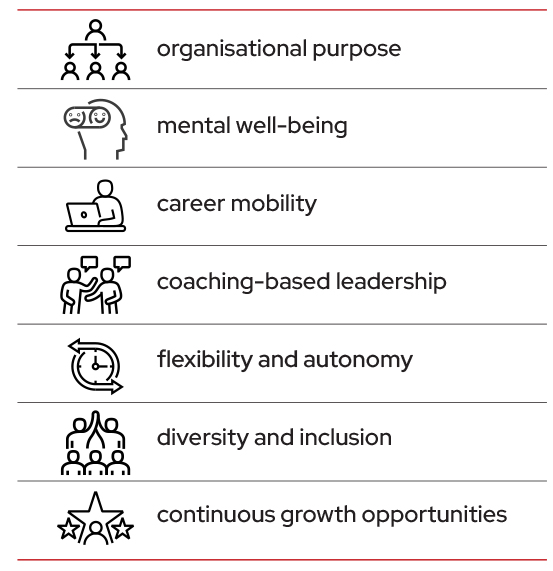
Banks that fail to adapt their leadership cultures may struggle to attract and retain future talent.
The future leader must therefore evolve from being merely a ‘manager of people’ to becoming:
In the coming decade, technology itself may no longer be the biggest differentiator among financial institutions.
Most technologies will eventually become accessible across the industry.
The true differentiator will be organisational capability – specifically, the ability to attract, develop, retain, and continuously transform talent.
This places human capital strategy at the centre of banking competitiveness.
Forward-looking institutions are increasingly recognising that workforce transformation is not purely a human resource agenda. It is a strategic business agenda.
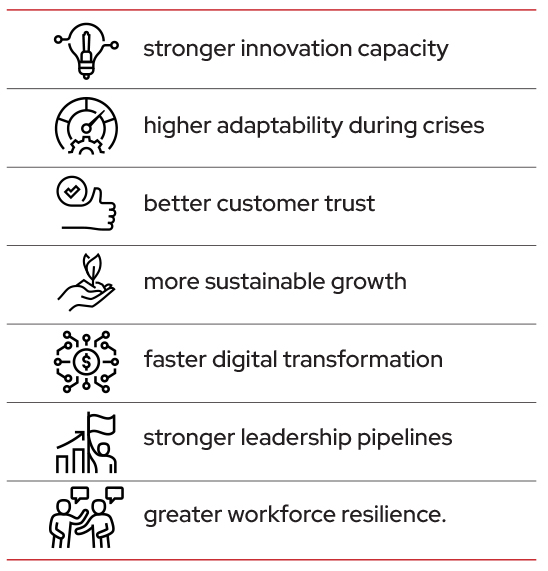
Banks that successfully build future-ready cultures will likely demonstrate:
This also requires a broader ecosystem approach involving regulators, industry bodies, educational institutions, technology partners, and governments.
The banking industry cannot solve future talent challenges in isolation.
Collaboration across the ecosystem will be essential in developing the next generation of banking professionals equipped for the realities of digital finance, sustainability transformation, AI integration, and global uncertainty.
Another major shift occurring globally is the increasing importance of purpose-driven careers.
Future banking professionals – particularly younger generations – increasingly want to work for institutions that contribute positively to society.
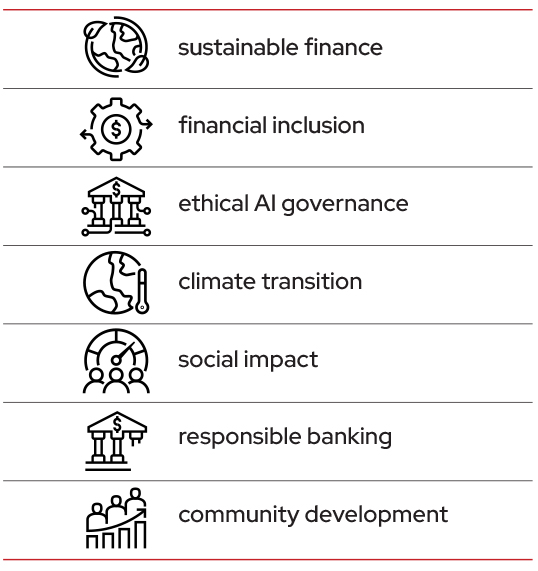
This includes areas such as:
The future workforce is no longer motivated purely by compensation and career progression. Meaning, impact, and organisational values matter significantly.
This creates both opportunities and pressures for banking institutions.
Banks that successfully align profitability with purpose will likely become more attractive employers for future talent. Conversely, organisations perceived as lacking social responsibility may face growing challenges in talent attraction and retention.
Sustainability is therefore no longer merely an ESG reporting exercise.
It is becoming a workforce and leadership imperative.
The banking industry now faces a defining moment.
The future will belong to institutions capable of balancing technological advancement with human-centred leadership.
This requires significant investment in:
Most importantly, it requires leaders willing to rethink traditional assumptions about work, leadership, talent, and organisational success.
The future of banking cannot be led using yesterday’s leadership models.
In a world defined by continuous disruption, the most successful institutions will not necessarily be the largest or oldest. They will be the most adaptive.
As the banking industry moves deeper into the era of AI, digitalisation, sustainability transition, and workforce transformation, one reality becomes increasingly clear:
Technology may accelerate banking transformation, but people will ultimately determine whether that transformation succeeds.
The ‘new norm’ is not about surviving disruption.
It is about learning how to turn uncertainty into strategic advantage.
And that journey begins with leadership.
Prof Dr Manivanan Saman, CEO of Asian Banking School, is a transformational leader with over three decades of experience shaping talent, leadership, and future workforce capabilities across Asia and globally. Known for driving strategic transformation and human-centred innovation, he champions the integration of AI, digitalisation, and leadership agility to prepare financial institutions for the future of work and next-generation banking.