Primed for the Future
Future Skills Framework maps the talent terrain and identifies strategies to future-proof the Malaysian financial sector.
 by
by 
Future Skills Framework maps the talent terrain and identifies strategies to future-proof the Malaysian financial sector.
by 
By Nur Syafiqah Syuzarina
In the two years since the Future Skills Framework (FSF) for the Malaysian Financial Sector was unveiled in July 2024, this AICB-led initiative has garnered significant support from financial sector leaders and institutions.
With the support of Bank Negara Malaysia (BNM) and industry associations, the flagship framework is critical in benchmarking the capabilities of approximately 167,500 financial services professionals in Malaysia, while serving as a strategic enabler for identifying future workforce competencies. An integral component of the central bank’s Financial Sector Blueprint 2022–2026 (FSB), the FSF was devised as a detailed and forward-looking talent framework accelerator to future-proof the workforce.
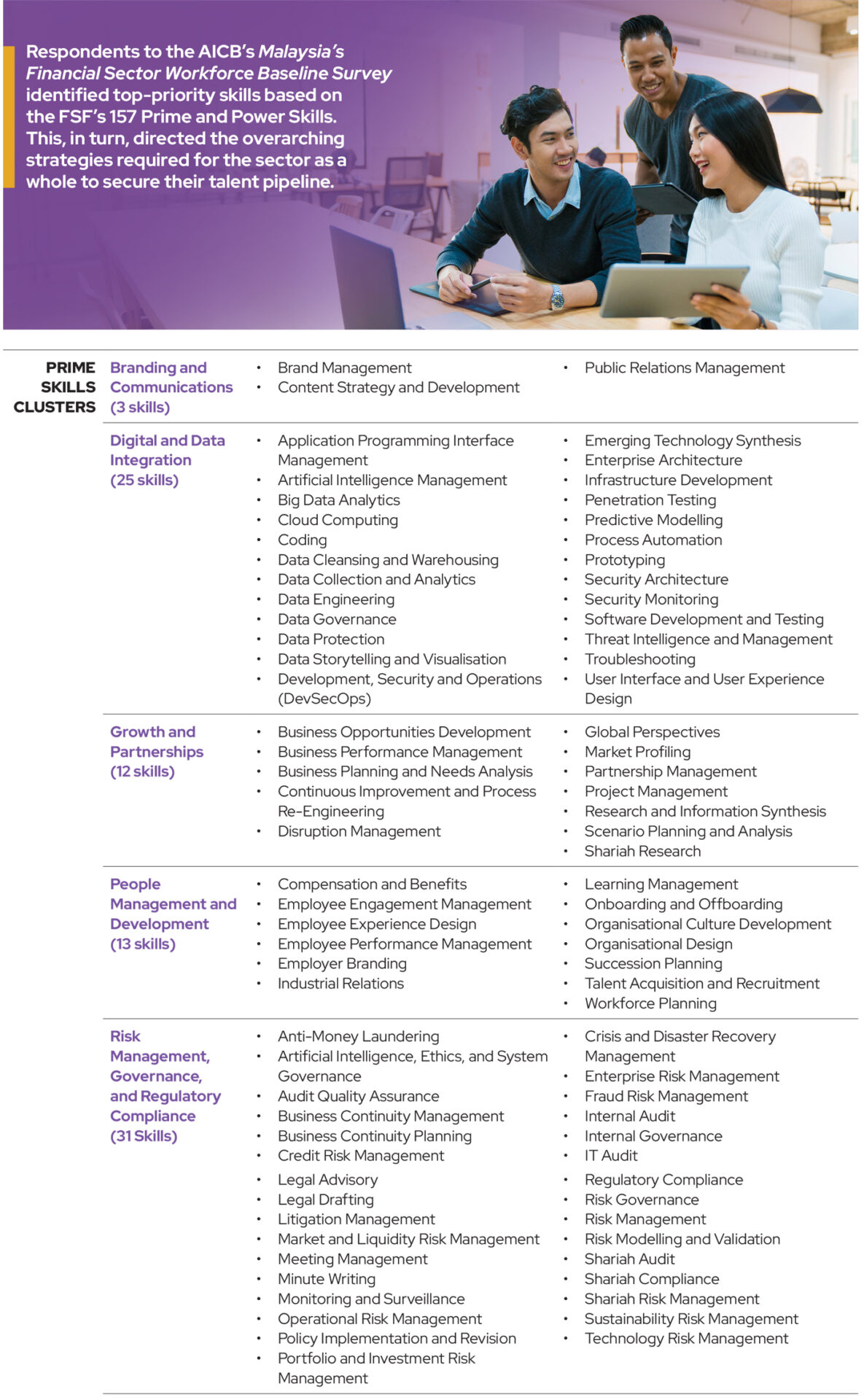
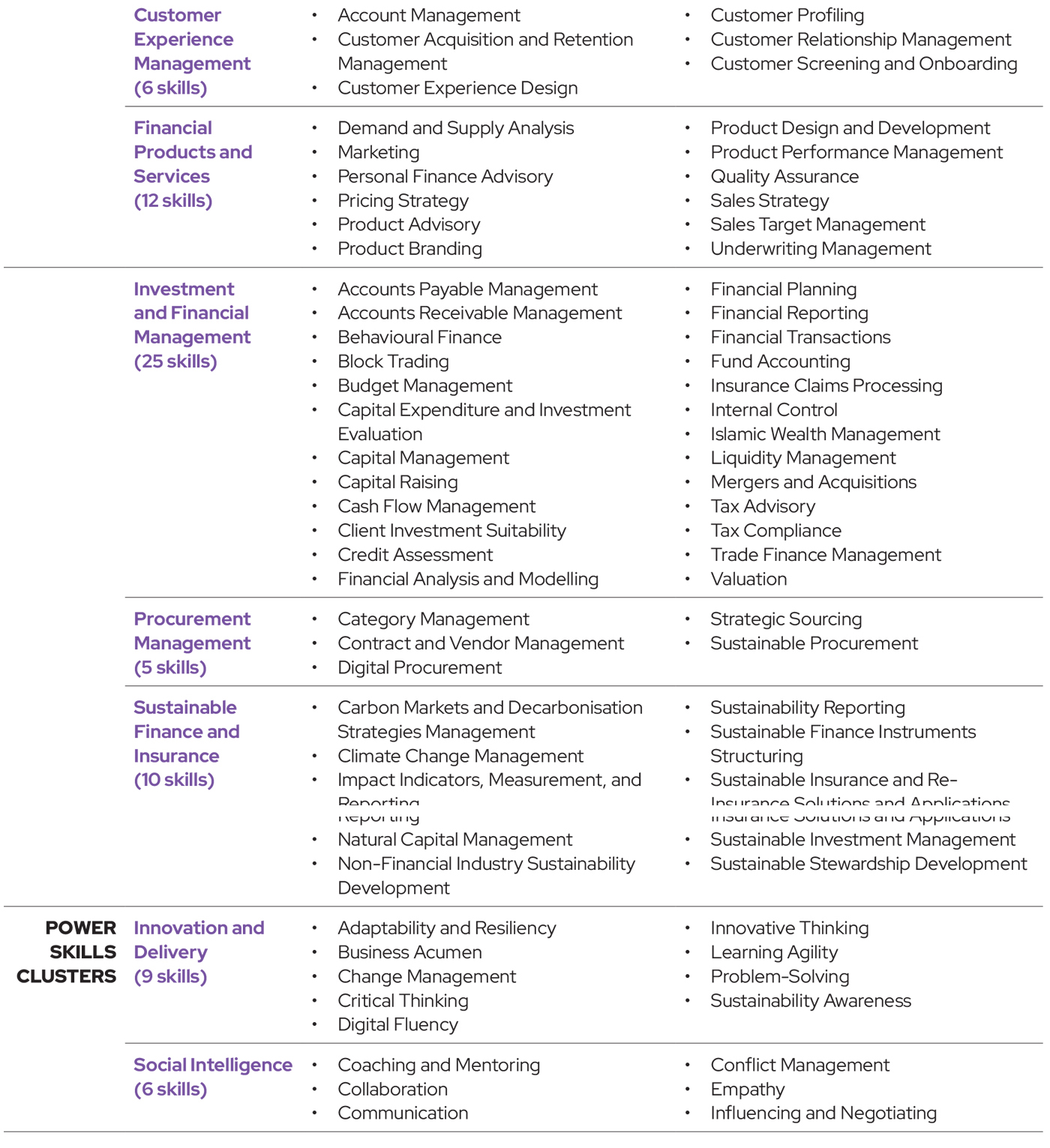
Its construct spans several levels, making it a dynamic and evolving tool with periodic reviews to ensure continued relevance and effectiveness. At its core, are 10 Prime Skills Clusters, which comprises 142 technical skills that are job role-specific; and two Power Skills Clusters with 15 fundamental skills relevant for all job roles. Collectively, both clusters map out 157 mission-critical skills across 161 job roles required for securing the financial sector’s long-term competitiveness.
At the organisational level, the FSF is deployed both as a diagnostic and planning tool. It assists banks and insurers to map out their current state of talent development, identify career development pathways for their employees, and guide capacity-building initiatives to bridge skills gaps.
To strengthen sector-wide coordination, with the rollout of the FSF, the AICB played a pivotal role in establishing the MyMAHIR Financial Sector Future Skills Talent Council under the ambit of Talent Corporation Malaysia. The 18-member Council, consisting of industry leaders and representatives from awarding bodies and training providers, is entrusted with steering talent solutions that are aligned with the FSF.
In October 2025, another major milestone was achieved with the launch of FSF Xcel to operationalise the FSF. Like the FSF, FSF Xcel was developed for and with the industry, transforming the framework from a reference tool into a data-driven, scalable digital platform that delivers structured assessments across the 157 skills. The platform, in essence, provides actionable insights into critical skills gaps and targeted interventions to strengthen capability development. Progressive onboarding of financial institutions is already underway, steadily expanding the reach and adoption of FSF Xcel across the sector.
In one of the Institute’s more recent engagements, on 20 May 2026, the AICB hosted representatives from Affin Bank and United Overseas Bank – both FSF Xcel subscribers – for an interactive session on navigating the FSF Xcel platform and its capabilities.
The AICB’s efforts in advancing the FSF and FSF Xcel underscore Malaysia’s vision to position itself as a regional hub for financial professionalism, innovation, and good governance, reinforced by a workforce that is equipped to adapt and continuously upskill amidst evolving industry demands.
Further details on the FSF and FSF Xcel are available on the AICB website. For enquiries and subscription to FSF Xcel, please contact [email protected].
The future-focused nature of the FSF is supported by evidence from the AICB’s Malaysia’s Financial Sector Workforce Baseline Survey, released in 2025, which was disseminated to 99 financial institutions and attained a 68% response rate. The survey captured insights from relevant stakeholders, namely, commercial and investment banks, Islamic banks, development financial institutions, digital banks, life and general insurers, and takaful operators.
The Survey is the country’s first baseline assessment to examine financial sector talent supply, demand gaps, and the impact of automation. Key outcomes of the Survey lend insight into emerging workforce trends and broadly indicate the viable strategies financial institutions can pursue to close skills gaps and accelerate their talent transformation agenda.
Highlights of the Survey:
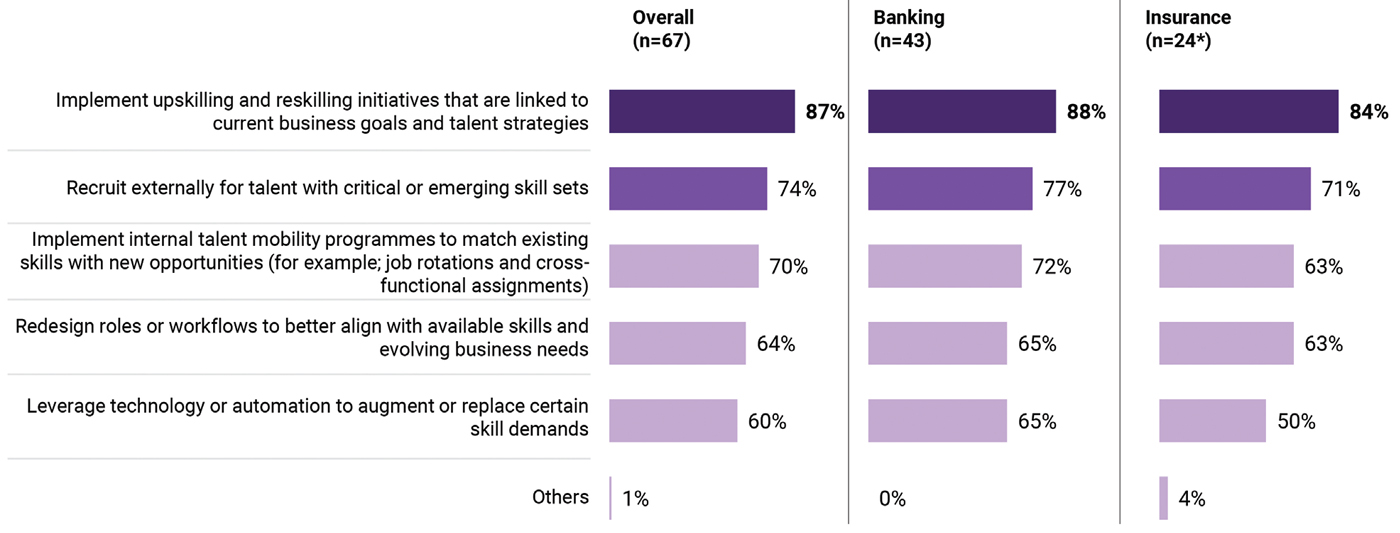
The Survey highlights that banks and insurers are intensifying efforts to close skills gaps through a multi-pronged strategy (see Figure 1).
The FSF priorities and Survey findings should be seen as living documents and tools, evolving to reflect the industry’s swift-changing workforce realities, emerging capability needs, and potential solutions. They are critical reference points for Malaysia’s financial sector as it navigates rapid technological advancement, sustainability imperatives, and evolving customer as well as employee expectations.
Moving forward, the promotion of skills mastery and continuous learning will remain the central priority. During the year, a Workforce Readiness Survey for the Malaysian financial sector will be conducted by the AICB to assess the industry’s progress in achieving FSF envisioned outcomes of the BNM FSB, with findings to inform the formulation of relevant talent strategies. In parallel, capacity-building programmes identified for potential inclusion in the FSF will be evaluated to ensure the delivery of FSF-aligned skills outcomes which strengthen workforce capability.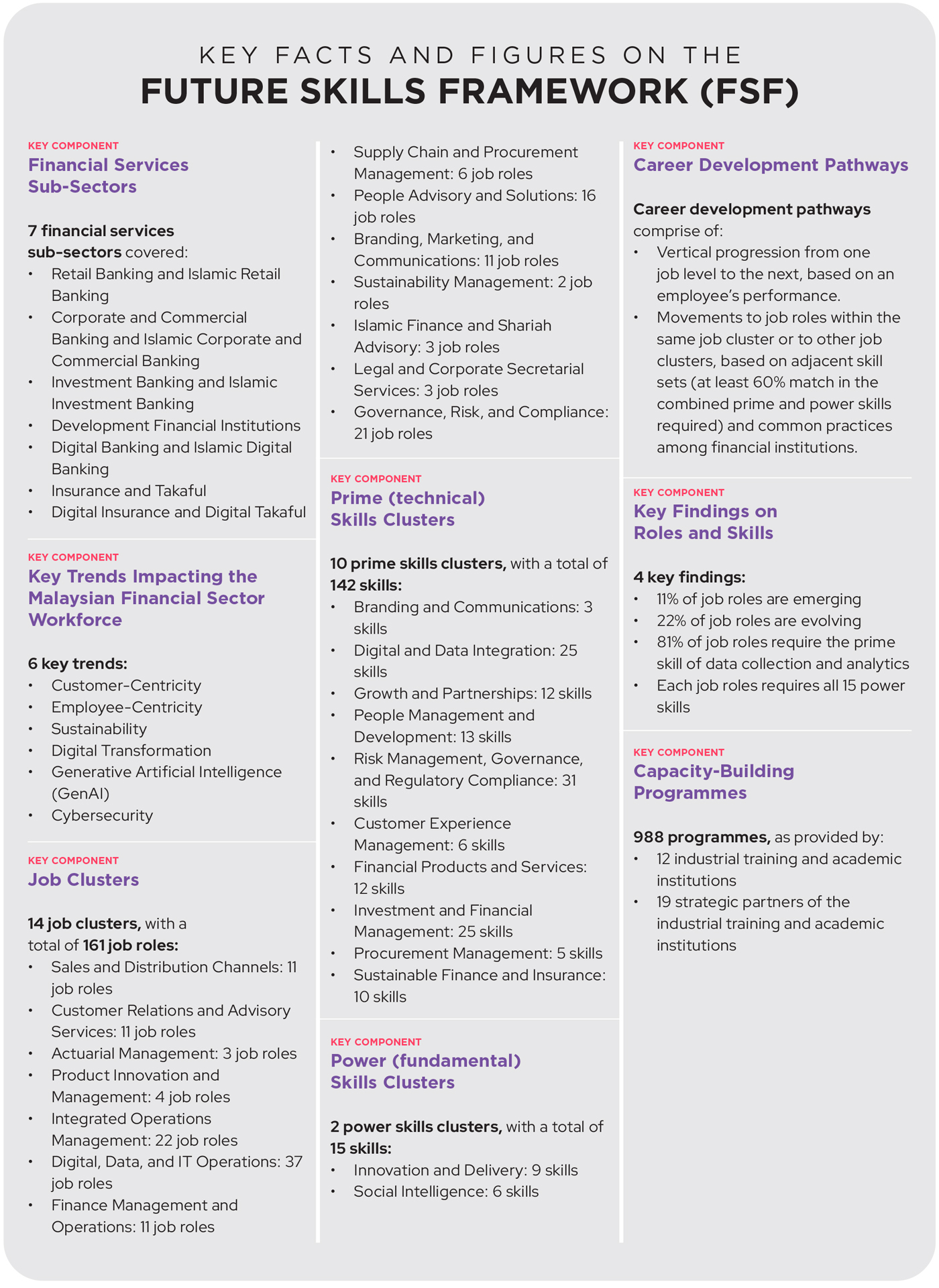
Nur Syafiqah Syuzarina writes for Akasaa, a strategic consultancy and publishing firm.